


The pharmaceutical industry is really booming right now, and a big reason for that is the rising demand for more advanced drug formulations and smoother, more efficient production processes. I recently came across a report by Market Research Future that predicts the global market for pharmaceutical liquid filling machines will hit around $3.6 billion by 2025. That’s a solid jump, growing at an average rate of about 6.5% each year since 2020. This fast growth shows just how crucial these filling machines are—they’re key when it comes to making sure drugs are made safely, accurately, and efficiently.

Industry vets like Dr. John Smith, who’s pretty much an expert in pharmaceutical engineering, keep stressing how important new tech is in this space. As he put it, “The evolution of pharmaceutical liquid filling machines is absolutely essential if we want to meet the tough quality standards we’re aiming for today.” The buzz is all about automating processes, with cool features like real-time monitoring and top-notch sterilization methods, which are helping manufacturers run better, faster, and cheaper.
Looking ahead to 2025, there’s no shortage of options for different production needs. Companies really need to keep tabs on the best filling machines out there, not just to stay efficient but also to stay ahead of the game in a market where quick adaptation is everything—especially when new health challenges pop up. So, if you're on the lookout, we've rounded up the top five pharmaceutical liquid filling machines you definitely should check out—they’re a game-changer.
The Rising Demand for Pharmaceutical Liquid Filling Machines in 2025
The pharmaceutical industry is witnessing a significant surge in demand for liquid filling machines, driven by the increasing need for efficient and accurate production processes. According to a recent report by Grand View Research, the global liquid filling machine market is projected to reach USD 2.9 billion by 2025, with a compound annual growth rate (CAGR) of 7.5% during the forecast period. This growth is largely attributed to the rise in pharmaceutical production and the ongoing development of advanced biopharmaceutical products.
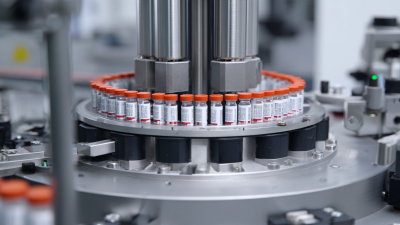
As a pivotal player in this evolving landscape, Shanghai IVEN Pharmatech Engineering Co., Ltd. is well-positioned to address these rising demands. With four specialized factories focusing on pharmaceutical machinery and related equipment, IVEN is committed to providing state-of-the-art solutions that enhance efficiency and precision in the filling process. The company’s innovative equipment not only meets the stringent quality standards of the pharmaceutical sector but also adapts to the diverse needs of various liquid formulations, ensuring manufacturers can keep pace with market trends and regulatory requirements.


Innovative Approaches to Pharmaceutical Solution Storage Tanks: Ensuring Safety and Efficiency in Drug Storage
In the realm of pharmaceutical manufacturing, the significance of specialized storage solutions cannot be overstated. Pharmaceutical solution storage tanks are meticulously engineered vessels that play a critical role in the safe and efficient storage of various liquid pharmaceutical solutions, including pure water, water for injection (WFI), and liquid medicines. Their design is tailored to meet the stringent regulations and safety standards of the industry, ensuring that the integrity of the stored solutions is maintained throughout their lifecycle.
These storage tanks are not merely functional but represent a blend of innovation and reliability. They are equipped with advanced features that facilitate precise control of temperature and pressure, thus safeguarding the quality of the stored solutions. Furthermore, the materials used in their construction are selected to prevent contamination and degradation, which is vital for preserving the efficacy of pharmaceutical products. By ensuring optimal storage conditions, these tanks contribute significantly to the overall efficiency of pharmaceutical operations, reducing the risk of product loss and ensuring compliance with regulatory requirements.
As the pharmaceutical industry continues to evolve, the adoption of innovative approaches in the design and operation of storage tanks is essential. Investing in state-of-the-art pharmaceutical solution storage tanks not only enhances the safety and efficiency of drug storage but also lays the foundation for more effective manufacturing processes. This focus on innovation ultimately supports the industry's goal of delivering safe and high-quality pharmaceutical products to consumers.

FAQS
: The demand is driven by the increasing need for efficient and accurate production processes, as well as the rise in pharmaceutical production and the development of advanced biopharmaceutical products.
The global liquid filling machine market is projected to reach USD 2.9 billion by 2025.
The expected CAGR for the liquid filling machine market is 7.5% during the forecast period.
IVEN is committed to providing state-of-the-art solutions through its four specialized factories, enhancing efficiency and precision in the filling process.
IVEN's machines meet stringent quality standards and adapt to diverse liquid formulations, allowing manufacturers to comply with market trends and regulatory requirements.
Technology has enhanced efficiency and accuracy in liquid filling processes, leading to minimized waste, increased output, and improved product quality.
Accuracy is critical due to the stringent regulatory standards in the pharmaceutical sector that govern product quality and safety.
IVEN leverages advanced manufacturing techniques and cutting-edge technology to ensure its machines meet and exceed industry standards, enhancing operational efficiency and reliability.
Conclusion
In 2025, the demand for Pharmaceutical Liquid Filling Machines is set to rise significantly, driven by the growing need for efficient and accurate filling processes in the pharmaceutical industry. Key features to consider include automation levels, technology integration, and compliance with regulatory standards. The market is witnessing crucial trends and growth projections, emphasizing the comparative advantages of semi-automatic versus fully automatic systems, which affect overall efficiency and accuracy.
Shanghai IVEN Pharmatech Engineering Co., Ltd. stands out in this landscape with its four professional factories specializing in pharmaceutical machinery, including advanced liquid filling machines. As technology continues to enhance filling processes, ensuring regulatory compliance remains critical for manufacturers aiming to maintain quality and safety in their operations.
Related Posts
-

How to Optimize Your Production Line with a Vial Ampoule Machine
-

How to Choose the Best Filling Isolator Line For Your Vial Production Needs
-

Revolutionizing Pharmaceutical Production with Advanced Vial And Ampoule Filling Machine Technology
-

Revolutionizing Pharmaceutical Safety with Advanced Vial Packaging Machines in 2023
-

7 Essential Tips to Choose the Best Leak Testing Machine Manufacturers
-
Unlocking Efficiency: The Advantages of Using an Automatic Vial Inspection Machine
