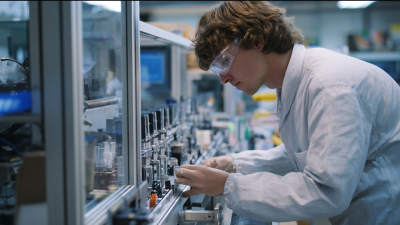
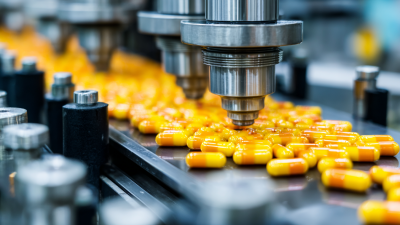
In today's fast-moving world of manufacturing, automated production of filter tubes is really becoming a game-changer. It helps companies work more efficiently and cuts down on human mistakes. By automating the process, businesses like FilterTech Innovations can produce consistent, high-quality filter tubes without breaking a sweat.
Automation brings in better precision and faster output. Machines can handle those boring, repetitive tasks all day long, which means skilled workers are freed up to focus on more complex, interesting jobs. Sure, this might mean some initial job shifts or worries about how workers will adapt, but with the right training, people can move into new, more advanced roles.
On top of that, investing in these automated systems can lead to big savings over the long haul. The upfront costs might look high, but the boost in productivity and less waste make it worth it—especially for companies that care about being eco-friendly. As the industry keeps changing, getting a good grasp of what automated filter tube production involves becomes super important for staying ahead in the game.

Benefits of Automated Filter Tube Production
Automated filter tube production offers numerous benefits for manufacturers. One significant advantage is improved efficiency. Machines can operate faster than human workers, producing more tubes in less time. This increased output meets growing market demands. Automation reduces human error, leading to consistent product quality. High precision in the manufacturing process is achieved through programmed controls.
Cost savings are another benefit. While the initial investment in automation can be high, the long-term savings outweigh this cost. Reduced labor costs and increased production rates improve profit margins. Additionally, automation minimizes material waste through accurate measurements. This efficiency in resource use promotes sustainability.
However, the transition to automation is not without challenges. Workers may need retraining for new skills. Companies might face initial resistance to the change. Despite these hurdles, the long-term benefits often justify the effort. Embracing automation in filter tube production is a step toward modern manufacturing.
Increased Production Efficiency and Speed
Automated filter tube production significantly enhances efficiency and speed. Industry reports indicate that automation can increase production rates by up to 50%. This improvement allows manufacturers to meet growing market demands. As the production process becomes streamlined, lead times shorten. Faster production translates to faster delivery, which can elevate customer satisfaction.
Moreover, automation reduces the risk of human error. Traditional methods often involve manual handling, which can lead to inconsistencies. In contrast, machines provide precision, ensuring uniformity in product quality. According to a recent study by the Manufacturing Institute, automated processes can lower defect rates by 30%. Such reliability is crucial in maintaining brand reputation and customer trust.
Despite these benefits, the transition to automated systems can come with challenges. Initial setup costs can be high, and staff may require additional training. Adapting to new technology often takes time. Businesses must weigh these factors carefully. It's crucial to ensure that automation aligns with long-term goals and workforce capabilities. Balancing productivity gains with these considerations is essential for sustainable growth in the industry.
Benefits of Automated Filter Tube Production
Enhanced Product Quality and Consistency
Automated filter tube production enhances product quality and consistency through precision engineering. This technology minimizes human error, achieving more uniform specifications across batches. According to a report by the Institute for Manufacturing, automated processes can reduce production variability by up to 30%. This means that each filter tube produced closely matches design specifications, ensuring reliable performance in critical applications.
Moreover, automation allows manufacturers to monitor data in real-time, leading to immediate adjustments. This proactive approach can identify potential quality issues before they escalate. A study from the International Journal of Advanced Manufacturing Technology noted that consistent quality control measures in automated systems improved overall product reliability by 25%. However, it is essential toacknowledge that initial implementation costs can be high, and training staff to manage these systems poses challenges.
While automated production enhances quality, it can also lead to over-reliance on technology. The risk of neglecting traditional craftsmanship is a concern. Manufacturers must strike a balance between automation and human oversight. Integrating both approaches can provide a more resilient production strategy while maintaining high standards. Continuous reflection on automation's role in quality management will foster improvements and ensure long-term success.
Reduction in Labor Costs and Resource Utilization
Automated filter tube production offers significant reductions in labor costs. According to a recent industry report, automation can lower labor expenses by up to 30%. This reduction is largely due to the decreased reliance on manual labor.
Fewer employees are needed for routine tasks, leading to lower operational costs. The technology enables more efficient production lines, streamlining processes and minimizing human error.
Resource utilization also sees substantial improvement. Automated systems can operate continuously, maximizing production rates without the downtime associated with human workers.
A study indicates that factories using automation experience a 25% increase in output. This boost is crucial for meeting increasing market demands. However, there are challenges to consider. Implementation costs could be high, and training employees to manage new systems may take time.
Though automation greatly improves efficiency, it raises questions about job displacement. Reassessing workforce roles becomes essential. Companies must find ways to reskill employees for new positions in the automated environment.
Balancing technology benefits alongside employee well-being remains a pressing consideration.
Minimization of Human Error in Manufacturing Processes
Automated filter tube production offers significant advantages. One primary benefit is the reduction of human error. In traditional manufacturing, human mistakes occur at every stage. Operators may misread measurements or misplace components. These errors lead to costly rework and delays. Automation minimizes these risks by ensuring consistency and accuracy throughout the process.
With automated systems, each step is performed by machines programmed to execute tasks precisely. The technology rarely deviates from established parameters. This reliability results in a higher quality product. Additionally, automated systems can operate continuously, reducing the likelihood of fatigue-related errors. Trusting machines for repetitive tasks frees skilled workers to focus on more complex challenges.
While automation streamlines production, it also raises questions about job displacement. Workers displaced by machines may struggle to find new roles. In some cases, workers may require retraining to adapt to new technologies. Industry leaders must prioritize workforce development to address these challenges. Balancing efficiency with workforce support is essential for a sustainable future.
Flexibility and Scalability in Production Operations
Automated filter tube production offers significant flexibility and scalability in manufacturing. This innovation allows companies to quickly adjust production volumes in response to market demands. For example, when demand spikes, the system can ramp up output without extensive downtime. Conversely, during slower periods, operations can scale back efficiently. Such adaptability is crucial for maintaining competitiveness.
Implementing automated systems can also streamline workflows. By reducing manual labor, companies can minimize human error. Fewer errors lead to higher quality products. Additionally, automation can bring consistency to the production process. Operators can focus on monitoring systems rather than repetitive tasks, resulting in better oversight.
Tip: Regularly evaluate your automation strategies. Each business has unique needs. It’s vital to identify areas that require improvement.
Another consideration is the initial investment. While automation can reduce long-term costs, upfront expenses can be high. Companies need to analyze their financial capacities. Balancing efficiency with costs is vital. Invest in automation carefully and strategically to ensure sustainable growth.
Tip: Start small with automation. Gradually integrate more systems as your organization adjusts. This approach minimizes risk and enhances learning.
Improved Safety Standards in the Workplace
Automated filter tube production significantly enhances workplace safety standards. A report from the National Institute for Occupational Safety and Health (NIOSH) highlights that automation can reduce human errors by as much as 70%. This reduction directly correlates with fewer workplace accidents. Manufacturing environments are prone to hazards, especially when manual labor is involved. Automating the process lowers the risk of injuries caused by repetitive strain or accidents.
Furthermore, automated systems often include safety features like emergency stops and sensors. These systems monitor for abnormalities, enhancing overall workplace security. Integration of automation doesn’t just improve efficiency; it allows operators to focus on oversight rather than manual tasks. Employees can thus engage in more complex, less dangerous activities. Surprisingly, a study from the Bureau of Labor Statistics found that companies implementing automation reported a 30% decrease in workplace injuries over a five-year span.
Despite these advancements, challenges remain. Some companies face resistance to change. Employees may feel threatened by automation, fearing job loss. It's crucial for organizations to address these concerns through proper training and communication. Engaging workers in the transition process can mitigate fears and foster a safer environment. Ultimately, while automating filter tube production presents clear safety benefits, the human element must not be overlooked. Balancing technology with workforce needs is vital in this evolving landscape.
What are the Benefits of Automated Filter Tube Production? - Improved Safety Standards in the Workplace
| Benefit |
Description |
Impact on Safety |
| Reduced Human Error |
Automation minimizes human inputs, reducing mistakes in production. |
Lowers risk of accidents caused by incorrect assembly or handling. |
| Consistent Quality Control |
Automated systems ensure uniformity in product output and standards. |
Improves reliability of safety features in filter tubes. |
| Enhanced Monitoring |
Real-time monitoring through automated systems checks compliance with regulations. |
Promotes proactive safety measures and immediate responses to issues. |
| Reduced Workplace Injury |
Less manual handling of materials leads to fewer physical injuries. |
Decreases overall incident rates in manufacturing environment. |
| Increased Efficiency |
Faster production rates without compromising safety or quality. |
Frees up personnel for safety audits and other critical safety roles. |
Environmental Advantages of Automated Production Techniques
The move towards automated filter tube production presents significant environmental advantages. Automated processes often use less energy compared to manual production. This energy efficiency directly reduces carbon emissions associated with manufacturing.
Moreover, automated production techniques help minimize waste. Traditional methods can lead to excessive material loss. Automation controls this by optimizing the material usage during production. However, not all automation is equally efficient; some systems may still generate unnecessary waste due to poor programming or outdated machinery.
Additionally, these systems can be programmed for precision. This precision ensures that the final product meets specific standards, reducing the need for rework. Yet, there are challenges. Continuous monitoring is required to maintain this level of efficiency. Neglecting maintenance can lead to lapses in quality and an increase in waste materials. Embracing automation, while beneficial, requires careful consideration of its implementation and ongoing management.
FAQS
: Automation minimizes human mistakes by using machines that execute tasks precisely, ensuring accuracy and consistency.
Operators may misread measurements or misplace components, leading to costly rework and delays.
Yes, automated systems provide higher quality products by maintaining established parameters without deviation.
Workers may be displaced by machines and find it challenging to secure new roles, requiring retraining.
Automated processes typically use less energy, reducing carbon emissions associated with manufacturing.
Yes, automation optimizes material usage, but poor programming may still result in unnecessary waste.
Not always; some systems may generate waste due to outdated machinery or improper programming.
Continuous monitoring is needed to maintain efficiency and ensure product quality, preventing waste increases.
Careful implementation is crucial, as neglecting maintenance can lead to lapses in quality and efficiency.
Industries should prioritize workforce development and offer retraining programs to help workers adapt.
Conclusion
Automated Filter Tube Production offers numerous advantages that significantly enhance manufacturing processes. Primarily, it leads to increased production efficiency and speed, allowing businesses to meet higher demands without compromising quality. Enhanced product quality and consistency is another critical benefit, as automation minimizes variations often seen in manual processes. Additionally, this approach reduces labor costs and optimizes resource utilization, contributing to overall cost-effectiveness.
Moreover, Automated Filter Tube Production helps minimize human error, leading to more reliable outputs. The flexibility and scalability of automated systems allow for quick adaptation to changing market requirements. Furthermore, it promotes improved safety standards in the workplace by reducing the need for manual interventions. Lastly, the environmental advantages of automated production techniques contribute to sustainable practices, making it a preferred method in modern manufacturing.