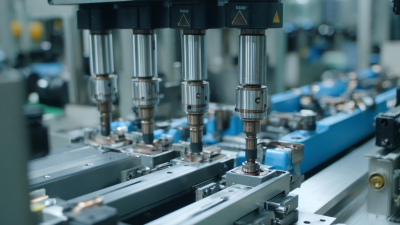
In the rapidly changing world of medical devices, fine-tuning the Pen Injector Assembly Line is super important. I read somewhere—actually, a report from the International Pharmaceutical Federation—that boosting efficiency on the assembly line can bump up production by as much as 30%. Crazy, right? That really shows why it’s so crucial for companies to keep looking for ways to improve continuously.
Dr. Emily Carter, who’s pretty much a go-to expert in medical device manufacturing, once mentioned, “Every second really does count when we’re talking about assembly line efficiency.” Using lean manufacturing methods can make a huge difference and simplify everything. But honestly, a lot of companies tend to overlook the regular check-ups and assessments that could help catch problems early. The key is to keep the assembly lines flexible and ready to adapt whenever needed.
Even with all the progress, there are still issues lingering in many facilities. A recent survey pointed out that about 40% of manufacturers are stuck using outdated machinery, which obviously hurts productivity. Paying close attention to each step in the process—sometimes it’s the smallest detail—can lead to pretty impressive improvements. Investing in proper training and leveraging data analytics can reveal hidden bottlenecks, making sure the Pen Injector Line is robust enough to handle the industry’s rising demands.
Understanding the basics of a pen injector assembly line is crucial for enhancing efficiency. A pen injector typically consists of several key components, including the barrel, plunger, and needle. Each part plays a vital role in the device’s functionality. During assembly, precision is necessary. However, human error can occur. Mistakes in component alignment can lead to costly defects.
The assembly process often involves multiple stages. Workers may assemble components manually or utilize automated machines. Automation can increase speed but may introduce its own challenges. For instance, automated systems require regular maintenance. If neglected, these machines can cause delays. Workers must be trained thoroughly, yet sometimes training is inconsistent. New employees might struggle with complex tasks initially.
Monitoring the assembly line's flow is essential. Bottlenecks can arise unexpectedly. For example, if the injection molding process is slow, it halts production. Continuous observation is important, but it’s easy to overlook small inefficiencies. Collecting feedback from workers can highlight areas for improvement. Engaging them in discussions may uncover simple solutions. Overall, understanding these basic elements allows for better optimization.
In pen injector manufacturing, efficiency hinges on key components. The assembly line must be optimized to minimize downtime. Research shows that improving cycle time can lead to a 15% increase in overall production efficiency. Every second counts, so understanding the critical parts of the process is essential.
One vital component is the injector’s mechanism. A flawless design ensures they function with precision. But, flaws at this stage can lead to significant delays. A recent study found that 20% of production issues stem from mechanical errors. These setbacks can disrupt the entire workflow. Regular maintenance schedules could mitigate some risks, but still, human error occurs.
Quality control also plays a crucial role. Inspections should be thorough yet swift. Statistics indicate that 30% of defects go unnoticed without rigorous checks. Such oversights can cost manufacturers both time and money. Training staff effectively is non-negotiable. Knowledge gaps among employees often slow down the assembly line. Streamlining these elements paves the way for improved efficiency. Continuous reflection on these processes will ultimately yield better results.
In the quest for efficiency, identifying inefficiencies in the pen injector assembly line is crucial. Common pitfalls often stem from outdated equipment or unoptimized workflows. For instance, a bottleneck in one station can delay the entire process. Workers may find themselves waiting, leading to frustration and lost productivity. Regular assessments of workstation layouts can reveal areas needing improvement.
Another issue is the lack of adequate training for assembly line workers. When employees are unclear about their tasks, mistakes occur. This not only reduces output but also compromises quality. Implementing standardized work procedures can help address this. Visual aids at each station could serve as quick reference points. Tracking key performance indicators is essential for spotting trends over time.
A constant review of inventory levels can also unearth inefficiencies. Excessive stock can clutter the workspace, while insufficient supplies can halt production. Striking the right balance is necessary. Encouraging workers to share feedback on the assembly process can yield insightful improvements. Embracing a culture of communication is vital for true optimization.
The implementation of lean manufacturing principles can significantly enhance the efficiency of a pen injector assembly line. A study by the Institute of Industrial Engineers indicates that companies that adopt lean techniques can see productivity improvements of up to 30%. This is crucial in a sector where precision and speed are paramount.
Tips: Focus on eliminating waste. This includes reducing excess inventory and minimizing wait times. Streamlining processes can lead to a smoother workflow. It can also drive down costs. Using tools like value stream mapping helps visualize inefficiencies. By mapping each step, teams can identify bottlenecks and areas needing attention.
In many cases, assembly lines suffer from suboptimal ergonomics. Workers might feel fatigued after long hours, which impacts productivity. Addressing these issues can enhance operator comfort and efficiency. Implementing ergonomic tools and adjusting workstations can lead to noticeable gains.
Tips: Regularly train employees on best practices. Continuous improvement relies on teams actively engaging with lean methodologies. They should feel empowered to propose changes. Reflecting on current processes is vital. Even small adjustments can lead to greater efficiency in the long run.
The use of automation in pen injector assembly lines is transforming the industry. Recent studies indicate that automation can improve efficiency by up to 30%. Implementing automated systems reduces human error and increases production speed. For example, robotics can perform repetitive tasks, allowing human workers to focus on complex operations. This shift not only accelerates assembly but also enhances product quality.
However, the transition to automation is not without challenges. Many companies struggle with integrating new technologies into their existing workflows. Research shows that 40% of firms experience difficulties during this process. Training staff to operate new equipment can also be time-consuming and costly. Addressing these issues is critical for fully leveraging automated solutions.
Data from industry reports highlights that advanced technologies, such as AI and IoT, are reshaping production environments. Companies using these technologies see a significant drop in downtime. Effective data analysis helps identify bottlenecks, guiding improvements. Still, there are concerns about cybersecurity and data integrity that must be addressed. The balance between efficiency gains and potential risks is essential for sustainable growth.
In optimizing the assembly line for pen injectors, training is crucial. Workers must grasp essential techniques to enhance their efficiency. Regular skill development sessions can help them attain better precision. These sessions should include hands-on practice, simulations, and real-time feedback. Just reading manuals isn’t enough. The learning environment must encourage questions and discussions. Workers often hesitate to share their struggles, which can hinder improvement.
Moreover, it’s essential to assess the training's effectiveness continuously. Are workers applying new skills efficiently? Observations reveal gaps in understanding. Some employees might still rely on old, established methods. Addressing this gap requires personalized training. Smaller groups can provide a more tailored approach. Workers will feel more comfortable asking for clarification without judgment.
Yet, despite the focus on training, not all workers may respond the same way. Some may excel quickly, while others lag behind. Reflecting on these disparities is vital. The goal should be a cohesive team. Investing in ongoing education can lead to innovation on the line. A well-trained employee can identify inefficiencies and propose enhancements.
In the pursuit of optimizing pen injector assembly line efficiency, monitoring and continuous improvement are crucial. Real-time data tracking can reveal bottlenecks in production. According to a recent industry report, over 30% of assembly line inefficiencies stem from unclear process guidelines.
Implementing visual management tools can enhance monitoring. Teams can use simple charts to display daily performance. This method empowers workers, allowing them to identify issues quickly. Keep records of assembly times and error rates. Regular reviews can help spot trends and recurring problems.
Tips: Encourage feedback from assembly staff. Their insights are invaluable for process improvement. Additionally, consider small, iterative changes rather than sweeping modifications. This approach reduces disruptions while fostering a culture of continuous improvement.
Constantly assessing the process may unveil unexpected hurdles. For instance, machine calibration could go unnoticed but significantly impact efficiency. Embrace a mindset of ongoing evaluation. It is essential to remain flexible and willing to adapt based on real-time insights.
The efficiency of Erythrocyte Sedimentation Rate (ESR) tube assembly lines has garnered significant attention recently, as more healthcare facilities seek to enhance the reliability and speed of their diagnostic processes. Recent industry reports indicate that the automation of ESR tube production has led to a remarkable reduction in manufacturing time, with some assembly lines achieving output rates exceeding 2,000 units per hour. This increased production capacity allows laboratories to meet the rising demand for precise ESR testing, crucial for diagnosing various inflammatory conditions.
In addition to speed, the integration of advanced technologies in ESR tube assembly lines has improved consistency and quality. Automated systems reduce human error, ensuring that each tube meets stringent quality standards required for accurate test results. According to recent data analysis, laboratories that have adopted automated ESR production lines have reported a decrease in test variability, with results becoming more reliable and reproducible. Furthermore, the efficiency gained from these automated systems has facilitated cost savings in labor and materials, allowing healthcare facilities to allocate resources to other critical areas of patient care.
As the healthcare industry evolves, the implementation of highly automated ESR tube assembly lines represents a significant step forward in laboratory medicine. With the ability to produce high-quality tubes efficiently, these systems support a more responsive healthcare environment, ultimately leading to better patient outcomes through timely and accurate diagnostic testing.
: The main components include the barrel, plunger, and needle. Each part is essential for functionality.
Precision prevents costly defects. Human error can lead to mistakes in component alignment.
Automation can speed up production, but it also requires regular maintenance. Neglect can cause delays.
Thorough training is crucial. Inconsistent training can lead to struggles with complex tasks for new employees.
Monitoring helps identify bottlenecks. Small inefficiencies can easily be overlooked but may halt production.
Lean techniques can enhance productivity by reducing waste and minimizing excess inventory.
Implementing ergonomic tools and adjusting workstations can alleviate fatigue and boost productivity.
Staff feedback is invaluable for identifying issues. Their insights often lead to practical solutions for improvement.
Teams should engage with lean methodologies and regularly reflect on current processes for small adjustments.
Visual tools help display performance metrics. This empowers workers to quickly identify and address issues.
The article "How to Optimize Pen Injector Assembly Line Efficiency?" outlines essential strategies for enhancing the productivity of Pen Injector Assembly Lines. It begins with an understanding of assembly line basics and key components involved in the manufacturing process. By identifying inefficiencies within the assembly line, manufacturers can implement lean manufacturing principles that streamline workflows and minimize waste.
Furthermore, the article emphasizes the importance of leveraging automation and technology to boost efficiency and reduce production times. Training and skill development for assembly line workers are crucial, ensuring that staff are well-equipped to handle advanced machinery and processes. Finally, ongoing monitoring and continuous improvement practices are recommended to maintain high standards and adapt to changing demands in the manufacturing environment. Through these strategies, companies can significantly improve the effectiveness of their Pen Injector Assembly Line operations.