


Ampoule Filling uses glass, plastic (polyethylene, polypropylene), and advanced polymers. Glass offers strong barrier properties and supports vacuum filling. Plastic provides flexibility and a wide size range. Choosing the right material ensures safety, compatibility, cost savings, and local availability. Manufacturers select materials for durability, patient convenience, and enhanced safety.
| Material Type | Advantages |
|---|---|
| Glass | Good barrier, widely accepted |
| Plastic | Shatter-resistant, lightweight |
| Advanced Polymers | Superior durability, chemical inertness |
Key Takeaways
●Choosing the right ampoule material ensures safety and product integrity. Glass offers excellent protection against chemical reactions, while plastic provides flexibility and shatter-resistance.
●Consider local sourcing to control costs and simplify logistics. Building relationships with local suppliers can reduce lead times and improve responsiveness to market changes.
●Evaluate the compatibility of your ampoule material with your product’s formulation. This prevents ingredient degradation and ensures optimal performance during storage and use.
Ampoule Filling Materials Overview
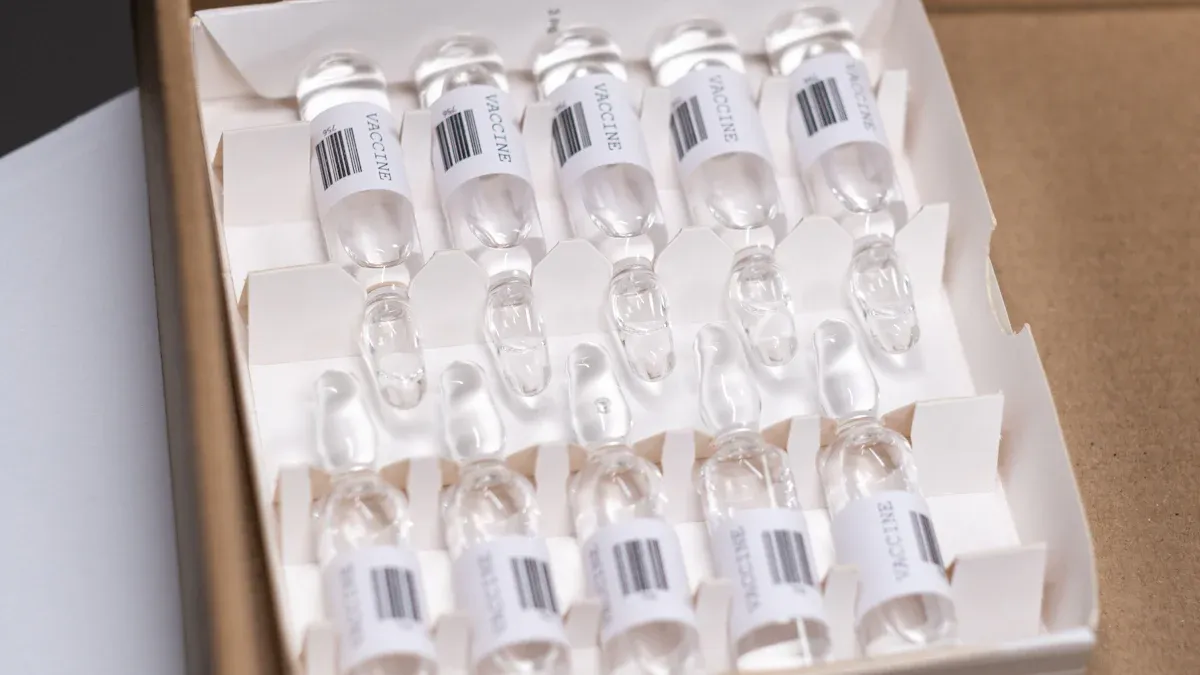
Glass Ampoules
Glass ampoules remain the gold standard for Ampoule Filling in pharmaceuticals. Their chemical durability protects medications from reactions, while hydrolytic resistance prevents water damage. The low thermal expansion coefficient reduces breakage risk during temperature changes. Optical transparency allows easy inspection, and sterilization is straightforward.
Tip: Borosilicate glass is especially valued for its non-reactive nature and ability to maintain drug integrity.
| Property | Description |
|---|---|
| Chemical Durability | Excellent resistance to chemical reactions, ensuring the integrity of the packaged medication. |
| Hydrolytic Resistance | Optimized to prevent degradation when in contact with water or moisture. |
| Low Thermal Expansion Coefficient | Minimizes the risk of breakage due to temperature fluctuations. |
| Optical Transparency | Allows for easy visual inspection of the contents. |
| Ease of Sterilization | Facilitates the sterilization process, ensuring safety and compliance with health standards. |
However, glass ampoules can present risks. Improper breaking may cause glass particle contamination, which can lead to health complications. Quality issues like flat heads, pointed tips, or bubble heads may occur if the filling process is not controlled.
Plastic Ampoules
Plastic ampoules offer a modern solution for Ampoule Filling. They are shatter-resistant, making them safer to handle and transport. Their compatibility with biologics supports drug stability. Plastic ampoules come in a wide range of sizes, from 0.3ml to 30ml, and allow for custom shapes.
●Shatter-resistant for enhanced safety
●Better compatibility with sensitive medicines
●Flexible design options
●Lightweight, reducing shipping costs
| Feature | Plastic Ampoules | Glass Ampoules |
|---|---|---|
| Shatter-resistance | Yes | No |
| Compatibility with biologics | Better | Limited |
| Size range | 0.3ml to 30ml | Limited to standard sizes |
| Design flexibility | High | Low |
Innovations in plastic manufacturing have improved sterility, precision, and efficiency. Advanced labeling technology and cost-effectiveness make plastic ampoules attractive for many uses.
Advanced Materials
Advanced polymers, such as cyclo-olefin polymer (COP), bring new advantages to Ampoule Filling. COP combines the clarity of glass with the durability of plastic. Multi-layer designs, like MultiShell vials, enhance oxygen resistance and protect sensitive medicines.
●Improved barrier properties
●High transparency
●Reduced drug-packaging interaction
●Enhanced chemical resistance
These materials also address concerns about extractables and leachables. Fluorocarbon and fluoroelastomer coatings minimize migration, maintaining product potency and shelf life. While initial costs for advanced polymers are higher, long-term benefits include lower variable costs and improved efficiency.
Choosing The Right Ampoule Filling Material
Safety And Compatibility
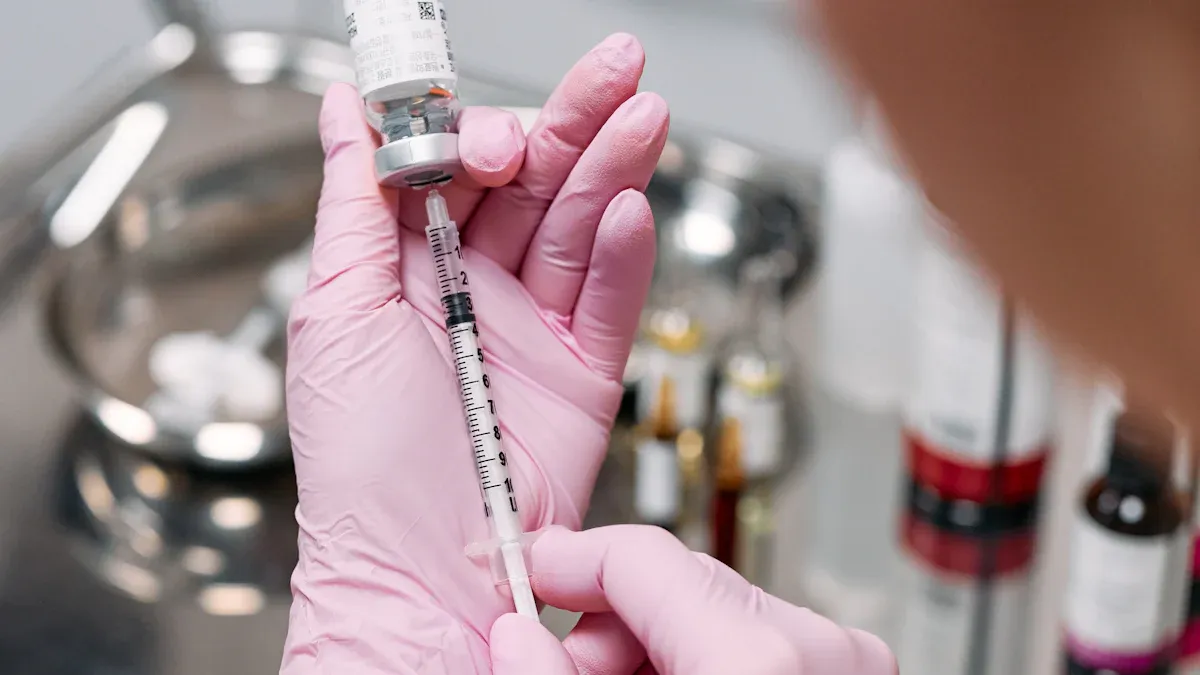
Selecting the safest ampoule filling material protects both your product and your customers. Chemical resistance and product stability are critical. Glass ampoules offer excellent protection against chemical reactions and moisture, making them ideal for sensitive pharmaceuticals. Plastic and advanced polymers also provide strong barriers, but their compatibility with certain chemicals must be tested over time.
Tip: Always match the ampoule material to the chemical properties of your product to prevent unwanted reactions or ingredient degradation.
The stability of your product depends on the container’s ability to block gas and moisture. Ampoules show no detectable change in gas or moisture content, even under stress or long-term storage. This makes them a top choice for products that require an extended shelf life.
| Storage Method | Stability under Stress Conditions | Stability under Long-term Storage |
|---|---|---|
| Ampoules | No detectable change in gas and moisture contents | Suitable for indefinite storage |
| Vials | Detectable moisture and oxygen ingress | Limited stability under constrained conditions |
Safety standards are strict in pharmaceuticals, cosmetics, and chemicals. Contamination control is essential. The following table shows how contamination is managed based on production volume:
| Unit Count Range | Contamination Response |
|---|---|
| Less than 5,000 units | Zero contaminated units; revalidation required for any contamination. |
| 5,000 to 10,000 units | One contaminated unit leads to investigation; two or more require revalidation. |
| More than 10,000 units | One contaminated unit leads to investigation; two or more require revalidation. |
For cosmetics, certifications like ISO, SGS, CE, and GMP confirm that your ampoule filling materials meet global safety and quality standards.
| Certification | Description |
|---|---|
| ISO | Ensures adherence to safety regulations for goods and equipment. |
| SGS | Certifies that the ampoule machine has met necessary safety requirements through inspection and testing. |
| CE | Indicates compliance with safety regulations set by EU countries. |
| GMP | Ensures consistent manufacturing of medicinal products and equipment according to quality assurance principles. |
Cost And Local Sourcing
Cost is a major factor in choosing ampoule filling materials. The price of glass ampoules depends on raw materials like silica sand, soda ash, and limestone. When these prices rise, the cost of ampoule filling materials increases as well. Plastic and advanced polymers may offer savings in shipping and handling due to their lighter weight.
Local sourcing can help control costs and simplify logistics. However, each region presents unique challenges:
| Region | Logistical Challenges | Recommendations |
|---|---|---|
| Europe | Fragmentation across languages and regulations, slower procurement cycles | Adopt an EU-compliance-first product strategy, target high-value clusters, build partnerships with regional distributors |
| APAC | Localization complexity, price sensitivity, political/regulatory unpredictability | Pursue a hub-and-spoke approach, tailor pricing/features per market, secure strong local distribution or JV partners |
| LATAM | Currency instability, long receivable cycles, fragmented logistics | Mitigate currency risk with local pricing, use local partners for compliance/logistics, offer flexible financing |
| MEA | Political instability, infrastructure gaps, complex import regimes | Prioritize GCC and key African economic hubs, use local agents for public procurement, design ruggedized/low-maintenance solutions |
Note: Building relationships with local suppliers and distributors can reduce lead times and help you respond quickly to market changes.
Application Needs
The right ampoule filling material depends on your product’s unique requirements. Consider these factors when making your choice:
●Chemical compatibility to prevent ingredient degradation and ensure product safety.
●Match dispenser type to product viscosity for optimal performance.
●Use opaque or airless packaging to protect sensitive ingredients from light and air.
●Enhance your brand value by selecting materials that reflect your company’s image.
●Choose recyclable materials like glass or aluminum to support sustainability goals.
●Think about the entire product journey, from filling to consumer use.
●Ensure compliance with regional safety regulations.
Sensitive chemical products, such as biologics, require special attention. Interactions between the product and container can lead to leaching or oxidative stress, which may reduce shelf life. Maintaining container closure integrity is vital, especially under extreme temperatures. Always evaluate the compatibility of your ampoule filling material with your product’s formulation and storage needs.
Pro Tip: Consult with your supplier to test material compatibility and ensure your ampoule filling solution meets all safety and regulatory requirements.
Choosing the right ampoule filling material is not just about cost or convenience. It is about protecting your product, your brand, and your customers.
Choosing the right ampoule filling material protects your product and your brand. Review the table below to guide your decision:
| Key Consideration | Description |
|---|---|
| Material Compatibility | Match material to product needs |
| Safety | Ensure chemical inertness and heat resistance |
| Cost | Control expenses and plan procurement |
| Local Availability | Assess supply and service in your region |
| Regulatory Compliance | Meet sustainability and legal standards |
Consult trusted suppliers and use these criteria to make the best choice for your application.
FAQ
What is the best material for pharmaceutical ampoules?
Glass ampoules offer unmatched protection and purity. Choose glass to ensure product safety and meet strict pharmaceutical standards.
Can plastic ampoules be used for sensitive products?
Yes. Modern plastic ampoules provide strong barriers and flexibility. They protect sensitive products and reduce breakage risk during transport.
How do I choose a local supplier for ampoule materials?
Look for suppliers with certifications like ISO or GMP. Ask about delivery times and support. Reliable partners help you maintain quality and reduce costs.
Post time: Feb-06-2026