


The working principle of ampoule filling production line centers on automated, sterile, and precise steps for filling and sealing each ampoule. This process reduces contamination risk and ensures accurate dosing.
| Benefit | Description |
|---|---|
| Reduced Contamination Risk | Sterile automation lowers human and airborne contamination. |
| Improved Efficiency | Automated transfers increase output and consistency. |
Key Takeaways
- Ampoule filling production lines automate the filling and sealing process, reducing contamination risks and ensuring accurate dosing.
- Sterile washing and high-temperature sterilization keep ampoules free from harmful microorganisms, which is crucial for patient safety.
- Automated inspection systems enhance quality control by detecting defects in real-time, ensuring that every ampoule meets strict safety standards.
Key Components of Ampoule Filling Production Line

Ampoule Feeding and Tray Sterilization
The ampoule filling production line starts with feeding empty ampoules into the system. A hopper or tray loader places each ampoule in the correct position. This step prevents misalignment and ensures smooth movement through the line. Next, the ampoules go through a washing system that uses sterile water or compressed air to remove particles. After washing, the ampoules enter a sterilizing tunnel. Here, dry heat at high temperatures eliminates microorganisms and pyrogens. This process keeps the ampoules sterile before filling.
Star Wheel and Conveyor System
A star wheel mechanism gently guides each ampoule along the production path. The star wheel aligns the ampoules for accurate filling and sealing. The conveyor system moves the ampoules from one station to the next. This setup reduces the risk of breakage and maintains a steady flow. The star wheel and conveyor work together to ensure precise handling and positioning.
| Function | Description |
|---|---|
| Infeed & Alignment | Positions ampoules for filling and sealing. |
| Outfeed | Moves sealed ampoules to the next stage of the process. |
Filling and Sealing Mechanism
The ampoule filling and sealing machine uses pumps and nozzles to fill each ampoule with the correct amount of liquid. The filling process takes place under laminar airflow to prevent contamination. After filling, a flame-sealing station melts the top of the ampoule, creating a hermetic seal. This airtight closure protects the contents from outside air and bacteria.
The goal is not simply to close the container, but to fuse the glass back into a single, seamless piece, creating a true hermetic seal.
HMI Control and Automation
Modern ampoule filling machines use HMI (Human-Machine Interface) panels for control. Operators can monitor the entire process, adjust settings, and troubleshoot issues quickly. Automation improves accuracy and reliability, reducing human error and increasing output. Data logs from the HMI help maintain quality control and traceability.
Working Principle of Ampoule Filling and Sealing Machine
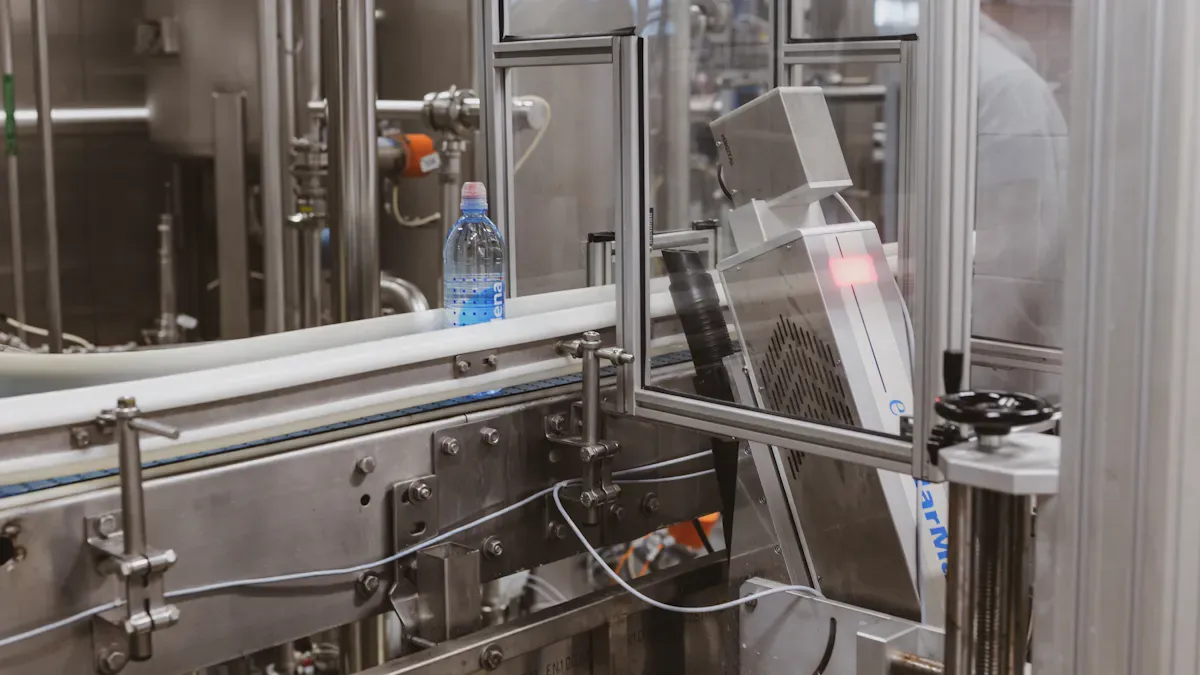
Ampoule Loading and Slant Traveling
The ampoule filling production line begins with the loading stage. Empty ampoules are placed onto adjustable conveyor tracks. These tracks fit different ampoule shapes and sizes, ensuring each ampoule stays secure during transport. Soft-touch belts handle the ampoules gently, reducing the risk of breakage. Sensors and sorting systems automatically orient the ampoules, so they are ready for the next step.
A wire mesh conveyor moves the ampoules to a receiving rack. Here, the ampoules are positioned at an incline. This slant traveling allows for precise filling. The incline ensures that the filling needle enters each ampoule at the correct angle, making the filling procedure efficient and accurate.
Washing and Sterilization Process
Cleanliness is essential in the ampoule filling and sealing machine. The ampoules pass through multiple internal cleaning stations. High purity water washes the inside and outside of each ampoule. Advanced external cleaning systems remove surface contaminants. After washing, the ampoules undergo dry heat sterilization. This process heats the glass containers to high temperatures, destroying bacteria and removing endotoxins. The sterilized ampoules cool in a cleanroom environment, which uses laminar airflow and HEPA filters to maintain sterility.
Maintaining a sterile environment is critical. Even minimal contamination can compromise the safety of liquid medications.
Filling Operation and Accuracy
The filling stage uses pumps and precision nozzles to deliver the exact amount of liquid into each ampoule. The ampoule filling machines operate under aseptic conditions to prevent contamination. The star wheel delivery system aligns each ampoule for filling, optimizing production flow and reducing downtime.
Accuracy is vital in the working principle of ampoule filling machine. Regular inspection and calibration of machine components help maintain product quality. The table below shows typical parameters for filling accuracy:
| Parameter | Target Value | Tolerance |
|---|---|---|
| Filling Volume | 2 ml | ± 0.05 ml |
| Reject Threshold | <1.95 ml or >2.05 ml | Immediate rejection |
Ampoule filling machines must meet strict regulatory requirements. Higher accuracy boosts production efficiency and ensures consistent dosing of liquid medications.
Sealing with Heat and Hermetic Closure
After filling, the ampoule moves to the sealing station. The ampoule filling and sealing machine uses high-temperature flames to melt the neck of the ampoule. This flame sealing process fuses the glass, creating a hermetic closure. The seal protects the contents from air and bacteria.
Other sealing methods include fusion sealing, which uses electromagnetic fields, and chemical sealing for heat-sensitive products. Flame sealing remains the standard for most ampoule filling production lines.
| Sealing Method | Description |
|---|---|
| Flame Sealing | Gas flame melts glass neck for airtight closure |
| Fusion Sealing | Electromagnetic field heats neck for rapid sealing |
| Chemical Sealing | Epoxy resin creates seal for heat-sensitive substances |
Inspection and Quality Control
Quality control is the final step in the ampoule filling and sealing machine process. Automated inspection systems check each ampoule for defects. Orientation devices ensure proper positioning for consistent inspection. High-speed rotation creates turbulence, exposing hidden contaminants. Lighting methods such as back lighting, strobe lighting, and dome diffused lighting enhance defect visibility.
Advanced technologies, including deep learning and YOLOv8 models, detect small defects in real time. Integrated inspection systems combine stress detection, size measurement, and surface checks. High-voltage leak detection verifies the integrity of the hermetic seal.
| Testing Method | Description |
|---|---|
| High-voltage leak detection (HVLD) | Electrical discharge detects leaks, ensuring 100% inspection during production |
Operators use HMI control panels to monitor the ampoule filling production line. HMI systems allow fast conversion between bottle sizes, eliminate manual adjustments, and strengthen GMP compliance. Data logs from HMI panels help maintain traceability and quality assurance.
The working principle of ampoule filling ensures that every ampoule is sterile, accurately filled, hermetically sealed, and thoroughly inspected before leaving the production line.
Ampoule filling machines use automated steps to fill and seal each ampoule. Sterility and accuracy protect product safety. Modern systems outperform traditional methods in both precision and hygiene.
Automation improves reliability and reduces contamination risk.
| Principle | Contribution to Product Safety |
|---|---|
| Sterility | Contamination-free environment |
| Precision | Accurate dosing and filling |
FAQ
What is an ampoule?
An ampoule is a small, sealed glass container. It holds a single dose of liquid medicine. The seal keeps the contents sterile until use.
Why is sterility important in ampoule filling?
Sterility prevents germs from entering the medicine. This protects patients from infections. Sterile processes ensure the safety and quality of each ampoule.
How does automation improve ampoule filling?
Automation increases speed and accuracy. Machines reduce human error. Automated systems also help maintain a clean and controlled environment.
Post time: Apr-13-2026