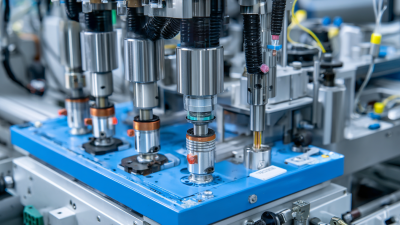
You know, in this fast-changing world of pharmaceuticals, having an efficient Autoinjector Production Line isn’t just a nice-to-have — it’s pretty much essential. I came across this report from Grand View Research that said the global autoinjector market could hit around $9.6 billion by 2025. That’s a solid growth rate of about 17.4% per year! It really shows how important it is for manufacturers to get their processes dialed in.
But let’s be real—efficiency isn’t just a goal you tick off a list. It’s what keeps companies competitive, especially with so many players out there. Major names like Teva and Amgen have been pouring serious resources into smarter, more advanced automation to boost their production lines. Still, with all these high-tech machines and constantly changing rules and standards, things don’t always go perfectly. Sometimes, they hit bumps, and inefficiencies pop up, causing hiccups in their output.
Getting the Autoinjector Production Line running smoothly isn’t only about throwing money at new tech. It’s also about really understanding those little details in the workflow. When you make strategic tweaks, you can cut costs and end up with a better quality product. But here’s the catch: sometimes, things don’t turn out exactly how you expect. It’s a continuous back-and-forth — always assessing, adjusting, and fine-tuning your approach. If you pay attention to these little things, it could really make all the difference in making the line more efficient and reliable.
The production efficiency of autoinjectors is crucial in today's healthcare landscape. These devices play a vital role in delivering medications swiftly and safely. Efficient production lines ensure that these essential tools reach patients without unnecessary delays. Each moment counts, especially in urgent medical situations.
Improving production efficiency involves numerous factors. Streamlined workflows can reduce bottlenecks, but they can be challenging to implement. It's important to recognize that not every approach works for all manufacturers. Regular assessments are needed to pinpoint inefficiencies. This requires a skilled team familiar with both industry standards and innovative practices. Knowledge sharing among employees can lead to significant improvements.
Automation and technology integration can enhance output. However, over-reliance on machines can introduce issues if not monitored closely. Human oversight is still necessary to maintain quality and address anomalies promptly. A well-balanced strategy that combines human expertise and technological support is essential. Constant reflection and willingness to adapt are keys to achieving higher efficiency.
In analyzing current production line workflows for autoinjectors, it's crucial to identify bottlenecks. Bottlenecks can significantly hinder production efficiency. According to a report by the International Society for Pharmaceutical Engineering, optimizing these areas can improve efficiency by up to 30%. The main causes of bottlenecks often include equipment limitations, staff training gaps, and inadequate process mapping.
One key tip for enhancing efficiency is to invest in technology that provides real-time data analytics. Implementing a system that tracks production metrics can highlight slowdowns immediately. Additionally, providing ongoing training for staff is critical. Well-trained workers can adapt more quickly to changes in the workflow. Companies can conduct regular skill audits to identify areas needing improvement.
Another area to focus on is inventory management. Streamlining inventory processes reduces delays caused by material shortages. Effective inventory tracking systems prevent excess stock or stockouts, which can disrupt production flows. It's essential to routinely review supply chain agreements. This can reveal areas for cost reduction without compromising quality. By addressing these factors, manufacturers can boost production line efficiency significantly.
Incorporating lean manufacturing principles into autoinjector production can significantly boost efficiency. A study by the Lean Enterprise Institute reveals that companies implementing lean techniques see a 30% reduction in waste. This reduction translates not only to lower costs but also to faster production cycles.
One critical aspect is just-in-time (JIT) inventory management. By adopting JIT, manufacturers minimize excess stock and streamline their supply chains. However, challenges arise. Balancing JIT with the need for sufficient safety stock requires careful planning. Furthermore, maintaining quality standards while increasing speed can lead to increased pressure on production teams, necessitating a culture of continuous improvement.
Another principle, value stream mapping, helps pinpoint inefficiencies in the workflow. A survey from the Society of Manufacturing Engineers found that 60% of manufacturers have not fully implemented value stream mapping. This oversight can lead to missed opportunities for optimization. Therefore, fostering a mindset that embraces change is essential. Lean principles provide a framework; the challenge lies in applying them consistently throughout the organization.
In today's fast-paced manufacturing landscape, integrating automation and technology is crucial for enhancing autoinjector production line efficiency. Adopting intelligent systems can help reduce human error and speed up processes. However, it's essential to continuously assess these technologies to ensure they meet the needs of your operation.
One effective approach is implementing real-time data analytics. This allows for better monitoring of production metrics and quicker decision-making. It's important to evaluate the data regularly. Are there any bottlenecks? Automation can streamline operations, but it must be closely aligned with actual production needs.
Another tip is to invest in modular equipment. This allows for flexibility and easy upgrades as technology advances. However, consider if frequent updates could disrupt your workflow. Balancing innovation with stability is key. Use simulations to forecast the impact of new technologies. Reflection on your production line design can unveil areas needing improvement. Streamlining processes with technology requires ongoing reflection and adjustment to truly optimize efficiency.
Training and empowering staff are critical to optimizing autoinjector production lines. A skilled workforce can enhance efficiency significantly. According to a report by the International Society for Pharmaceutical Engineering, well-trained staff can improve output by up to 30%. This highlights the importance of comprehensive training programs tailored to specific production needs.
Investing in training doesn't just improve speed. It also enhances accuracy. Employees trained in quality control methods can better identify defects, reducing waste. Data from the Manufacturing Institute shows that companies with a strong focus on training experience 24% higher profits. Introducing simulations and hands-on workshops can make training engaging and effective.
However, training is not a one-time event. Continuous learning is essential. Implementing mentorship programs helps in transferring knowledge between employees. This practice encourages team collaboration and innovation. Regular feedback sessions are also vital. They create an environment where staff can voice concerns and suggest improvements. It’s crucial to reassess training methods periodically. Stagnant practices may lead to decreased effectiveness and employee disengagement. Adaptability in training ensures that the workforce remains competent and motivated.
| Tip Number | Tip Description | Expected Outcome | Implementation Timeframe |
|---|---|---|---|
| 1 | Train staff on the latest autoinjector technology | Increased operational knowledge and reduced errors | 1-2 months |
| 2 | Implement lean manufacturing principles | Reduction of waste and enhanced productivity | 3-6 months |
| 3 | Invest in automation technology | Higher output rates and consistency | 6-12 months |
| 4 | Establish clear standard operating procedures (SOPs) | Consistency in production and ease of training | 1 month |
| 5 | Conduct regular maintenance on equipment | Minimized downtime and extended equipment life | Ongoing |
| 6 | Encourage team collaboration and communication | Faster problem-solving and innovation | Ongoing |
| 7 | Monitor and analyze production data | Improved decision-making and efficiency | Monthly reviews |
| 8 | Provide feedback and recognition to staff | Enhanced morale and productivity | Ongoing |
| 9 | Utilize quality control measures | Reduction in defects and rework | Ongoing |
| 10 | Review and adapt processes regularly | Continuous improvement in efficiency | Quarterly |
Regular maintenance is crucial for optimizing autoinjector production lines. Consistent checks on machinery ensure they operate smoothly. This minimizes downtime, which can be costly. A well-implemented maintenance schedule can increase the lifespan of production equipment. Worker training is essential too. Employees should understand how to troubleshoot basic issues. Routine inspections also help identify problems before they escalate, helping maintain efficiency.
Quality control is equally vital. Every batch produced must meet strict standards. Implementing statistical process control can detect variations in production. Training staff on quality metrics boosts their awareness and accountability. Regular audits and reviews can reveal gaps in the process. This is a chance to refine operations. It’s not uncommon to overlook small inconsistencies, but these can lead to larger issues.
Monitoring your production environment is key. Factors like temperature and humidity can influence product quality. Equipment should be calibrated regularly, and personnel must follow protocols diligently. Reflecting on past mistakes can lead to better practices. Emphasizing a culture of quality and accountability makes a significant difference in overall efficiency.
Monitoring production metrics is crucial for enhancing autoinjector production line efficiency. Key performance indicators (KPIs) are essential to evaluate the production process. Focus on metrics like cycle time, yield rates, and downtime. By tracking these measures, you can spot bottlenecks in the workflow. Regularly reviewing data helps identify areas needing improvement. It is vital to understand that not all metrics tell the full story. Some may reflect short-term issues but not long-term sustainability.
Engaging your team in this review process enriches your insights. Encourage workers to provide feedback on operational barriers. This information is invaluable and often reveals unseen challenges. Additionally, invest in training programs to improve skills and awareness. When employees feel included, they become more motivated to identify inefficiencies. Yet, keep in mind that changes to production lines can lead to temporary disruptions. This is a natural part of progress. Embrace this uncertainty as a chance to innovate and refine your processes further.
The production of IV solutions is a critical component in pharmaceutical manufacturing, and the adoption of advanced technology is transforming this sector. One notable innovation is the automatic PP bottle IV solution production line, which comprises three essential components: the preform/hanger injection machine, the bottle blowing machine, and the washing-filling-sealing machine. This integrated system offers remarkable efficiency, allowing manufacturers to increase production capacity while maintaining high standards of quality.
According to recent industry reports, the global market for IV solutions and related packaging has seen a substantial growth rate, attributed to the increasing demand for sterile pharmaceutical products. The automatic production line not only supports high production efficiency but also minimizes production costs through automation and intelligent design. The streamlined processes ensure stable performance and quick maintenance, which are crucial for meeting the rigorous demands of the healthcare sector.
Moreover, the shift towards automated production lines aligns with the industry's focus on humanized manufacturing practices. This development allows for less manual intervention, reducing the potential for human error and enhancing overall safety in production. As the pharmaceutical landscape evolves, the implementation of such innovative production solutions positions manufacturers to meet both current and future challenges in providing high-quality IV solutions efficiently.
: Production efficiency ensures timely delivery of medications, crucial in urgent medical situations. Delays can have serious consequences for patients.
Streamlined workflows, regular assessments, and skilled teams help identify and eliminate bottlenecks in production processes.
While automation enhances output, over-reliance on machines can cause issues. Human oversight stays vital for maintaining quality.
Equipment limitations, staff training gaps, and inadequate process mapping often create bottlenecks in production workflows.
Real-time data analytics systems track production metrics, highlight slowdowns, and facilitate quick adjustments in workflows.
JIT minimizes excess stock and streamlines supply chains. However, balancing it with safety stock is essential to avoid shortages.
Ongoing training and regular skill audits empower staff to adapt quickly to changes in production workflows.
Value stream mapping identifies inefficiencies and missed optimization opportunities, but many manufacturers overlook its implementation.
Continuous improvement helps maintain quality while increasing speed, reducing pressure on production teams.
Applying lean principles consistently can be difficult, requiring a commitment to foster an organizational mindset embracing change.
Optimizing the Autoinjector Production Line is crucial for enhancing overall efficiency and ensuring high-quality output. This involves understanding the current workflows and identifying bottlenecks that hinder performance. By implementing lean manufacturing principles, companies can eliminate waste and streamline operations. Additionally, integrating advanced automation and technology can further enhance process flow, making production more efficient.
Training and empowering staff plays a pivotal role in boosting productivity, as knowledgeable employees are essential to maintaining optimal performance. Regular maintenance and rigorous quality control measures are also vital to ensure the production line operates smoothly. Finally, measuring and reviewing production metrics allows for continuous improvement, ensuring that the Autoinjector Production Line remains competitive and effective in meeting market demands.