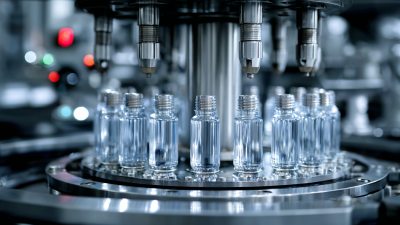
The 139th Canton Fair is shaping up to really showcase some of the latest tech, especially in areas like machinery and healthcare. One of the big highlights will be the newest Pharmaceutical Liquid Filling Machines. Interestingly, a recent industry report suggests that the global market for these machines could hit around $5 billion by 2026 — mainly thanks to improvements in precision and efficiency. Really impressive stuff!
Dr. Michael Smith, who’s an expert in pharmaceutical manufacturing, pointed out that, “The development of these Liquid Filling Machines is absolutely key to keeping up with new compliance rules and operational demands.” His words highlight just how important innovation is in this field, especially now when manufacturers are under pressure to produce more, faster, and with even higher quality standards.
And here’s something cool — at the 2026 Canton Fair, they’re planning to roll out some AI-powered search tools. That means buyers will be able to filter through options more easily and quickly find suppliers that meet all the necessary certifications. It’s a sign of how tech is really changing the game when it comes to sourcing equipment. But, and here’s the thing, even with all these new advancements, the industry really needs to stay focused on maintaining top-notch quality while still enjoying these new efficiencies. Balance is everything, right?

Overview of the 139th Canton Fair
The 139th Canton Fair promises to be an exciting event for the pharmaceutical industry. This fair is renowned for showcasing cutting-edge machinery, including liquid filling machines. Attendees can expect a diverse range of technologies and designs tailored for various manufacturing needs. This year, innovations in efficiency and accuracy will take center stage, catering to the needs of pharmaceutical manufacturers worldwide.
Walking through the fair, one can witness the intricate details of these machines. Sleek designs and user-friendly interfaces attract many visitors. However, not all designs are perfect. Some machines may present challenges in terms of adaptability. These areas require reflection and improvement. Nevertheless, the fair serves as a platform for networking and knowledge sharing. Key industry players will collaborate, discussing solutions and advancements in filling technology. Enthusiasts and experts alike will benefit from the interaction and insights available at this significant event.
Top Pharmaceutical Liquid Filling Machines at the 139th Canton Fair
Significance of Pharmaceutical Liquid Filling Machines
Pharmaceutical liquid filling machines play a crucial role in the industry. They ensure accuracy and efficiency in packaging medicines. The demand for these machines has grown significantly in recent years. More companies are recognizing their importance. High-quality filling machines minimize waste. They also enhance the speed of production.
The precision of these machines cannot be overlooked. Errors in filling can lead to severe consequences. For example, underfilling affects dosage accuracy. Overfilling wastes valuable resources. Regular maintenance is essential to keep machines running smoothly. Yet, many companies neglect this aspect. Investing in training operators is also vital. Well-trained staff can lead to better performance.
At the 139th Canton Fair, numerous options are available. Attendees can explore the latest technologies. However, not every machine will suit every need. Companies must assess their requirements carefully. Finding the right machine can take time. It is worth the effort for quality assurance and efficiency.
Key Features to Consider in Liquid Filling Machines
When considering liquid filling machines, several key features are essential. The first is accuracy. A precise filling volume is crucial for pharmaceutical products. Machines should provide consistent dosages. Variations can lead to compliance issues or product waste. Look for machines with advanced sensors for better calibration.
Speed is another critical factor. High-speed filling machines can greatly enhance production efficiency. However, faster doesn’t always mean better. Sometimes, increased speed can compromise accuracy. It’s vital to find a balance between speed and precision in your operations.
Tips: Always assess the machine's adaptability. Can it handle different container shapes and sizes? This flexibility can save time and money in the long run.
Another important aspect is ease of cleaning. Machines in the pharmaceutical sector must meet strict hygiene standards. Look for designs that ensure easy access for maintenance. This may seem minor but can save you from bigger issues down the road.
Think carefully about your specific needs. What is the expected production volume? How often will the machine need to be cleaned? These questions can guide your choice significantly.
Top Exhibitors Showcasing Liquid Filling Machines
At the 139th Canton Fair, numerous exhibitors showcased innovative liquid filling machines. These machines play a crucial role in the pharmaceutical industry. Efficiency and precision are vital in this sector. Many exhibitors brought unique designs and advanced technologies to the event. Visitors could see machines that fill various liquid types, from serums to suspensions.
When considering a liquid filling machine, it's important to assess the specific needs of your production line. Some machines offer high-speed filling capabilities, while others focus on accuracy. Checking the compatibility with different bottle sizes is also essential. The diversity in design means you can find a machine that fits your unique requirements.
Tips: Always request a demonstration before purchasing. Seeing the machine in action can reveal strengths and weaknesses. Evaluate the ease of operation as well. User-friendly machines can help streamline training for staff. It’s worth investing time in research and feedback from other users. Balancing costs with features can be challenging but necessary for long-term success.
Innovative Technologies in Pharmaceutical Filling Equipment
The 139th Canton Fair showcased advanced technologies in pharmaceutical liquid filling machines.
These innovations are key to enhancing productivity and ensuring compliance in the pharmaceutical sector.
According to recent industry reports, the global pharmaceutical filling equipment market is projected to reach $8 billion by 2026,
growing at a CAGR of 6.3%. This growth reflects a surge in demand for precision and efficiency.
State-of-the-art filling machines now feature automated processes.
These machines reduce human error and improve output. For example, inline filling systems offer high-speed operations,
boosting the production rate significantly.
Moreover, advancements in technology include the use of AI to monitor quality.
This can lead to fewer product recalls and enhanced safety.
Tips:
Always evaluate the compatibility of filling equipment with your specific products.
Training staff on new technologies is crucial. Regular maintenance cannot be overlooked, as it directly impacts the efficiency and lifespan of the equipment.
Remember, even the best systems require fine-tuning to reach optimal performance.
Comparative Analysis of Leading Brands at the Fair
The 139th Canton Fair showcased a variety of pharmaceutical liquid filling machines. Attendees were keen to learn how different brands compete in efficiency and reliability. A comparative analysis revealed significant differences among the leaders. Some machines excelled in speed, while others focused on precision. It was fascinating to see how design variations impacted the overall functionality.
Tips for selecting the right machine: Always consider your production needs. Does speed matter more than precision for your operation? Take the time to analyze the specifications carefully. Look for user-friendly interfaces that simplify operation. Check if the machine can handle different liquid types.
Many visitors expressed uncertainty about which features are essential. Some were overwhelmed by technical jargon. It is clear that not everyone feels equipped to make informed decisions. Understanding each machine's capabilities can lead to better choices. Pay attention to post-purchase support and maintenance options as well. Choosing a machine is a significant investment; it should meet long-term needs effectively.
Future Trends in Pharmaceutical Filling Machines
The pharmaceutical filling machine industry is rapidly evolving. Reports indicate that the market is projected to grow at a CAGR of 7.5% over the next five years. This growth is driven by increasing demand for liquid medications. The rise of chronic diseases fuels the need for efficient filling solutions.
Machine automation plays a critical role in this transformation. More manufacturers are incorporating advanced technology. High-speed, accurate filling ensures minimized waste and increased productivity. Industry experts emphasize the importance of flexibility. Machines must adapt to different container sizes and shapes. Many companies still struggle with this adaptability.
The integration of IoT in filling machines is a powerful trend. It allows real-time monitoring and data collection. This capability enhances operational efficiency and reduces downtime. However, companies must address cybersecurity risks associated with this technology. Future developments in filling machines will likely focus on sustainability. Eco-friendly materials and processes are demanded by consumers. The shift toward greener solutions is not yet universally adopted, leaving room for improvement.
FAQS
: Focus on accuracy. A precise filling volume is essential in pharmaceutical production.
Speed enhances efficiency, but it could compromise accuracy. Balance is key.
Ensure the machine can accommodate various container shapes and sizes. This flexibility is beneficial.
Compliance with hygiene standards is crucial in pharmaceuticals. Easy access prevents major maintenance issues later.
Consider production volume and cleaning frequency. These details guide your decision significantly.
Yes, many visitors feel uncertain about essential features and technical jargon.
Inquire about maintenance options and support services before making a decision.
Some machines may not adapt well to different products, requiring careful evaluation.
Design differences can lead to unique capabilities. Some machines prioritize speed, others precision.
It's an opportunity to gain insights and discuss advancements in filling technology with industry experts.
Conclusion
The 139th Canton Fair showcased a diverse range of Pharmaceutical Liquid Filling Machines, highlighting their growing significance in the pharmaceutical industry. This event served as a platform for exhibitors to present cutting-edge technologies and innovations designed to enhance efficiency, accuracy, and safety in filling processes. Key features such as automation capabilities, precision engineering, and ease of cleaning were emphasized, catering to the evolving needs of the pharmaceutical sector.
A comparative analysis of the leading brands revealed emerging trends in pharmaceutical filling technologies, indicating a shift towards more sustainable and cost-effective solutions. As these machines continue to advance, stakeholders are encouraged to stay informed about future developments that could redefine manufacturing practices in the pharmaceutical arena, ensuring optimal performance and compliance in the ever-evolving regulatory landscape.