


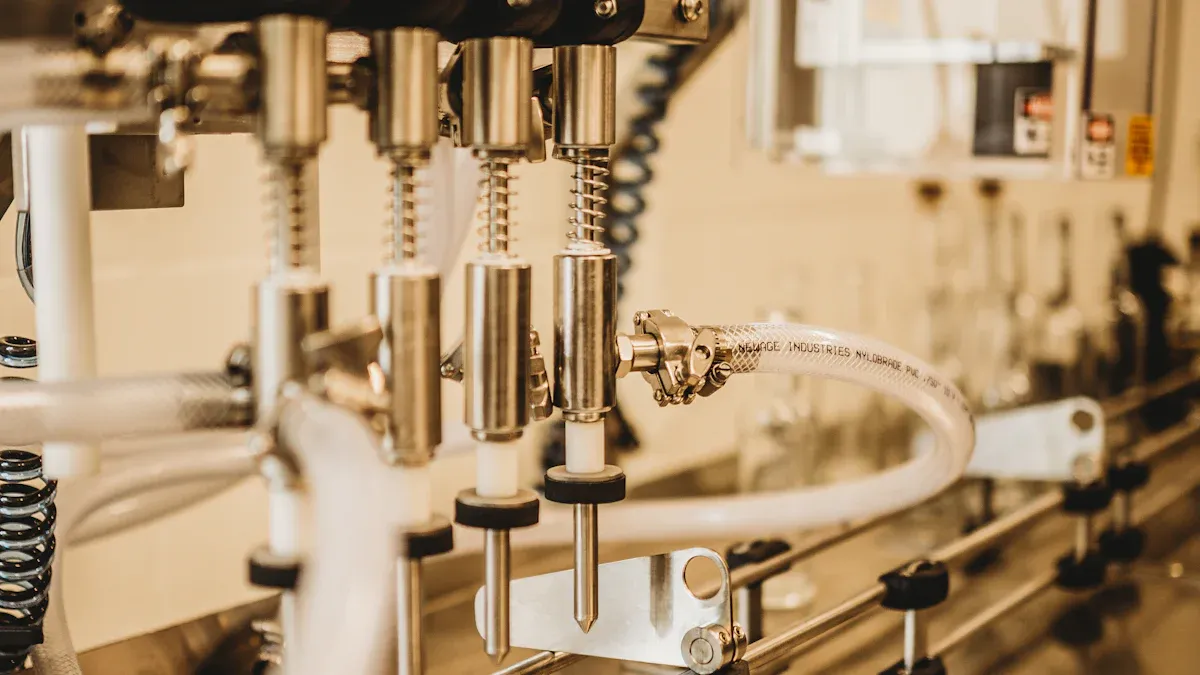
A full automatic ampoule filling production line usually costs between $5,000 and $320,000.
- Manual machines range from $2,000 to $5,000.
- Semi-automated models fall between $5,000 and $20,000.
- Fully automated Ampoule Sealing Machine prices start at about $20,000 and rise with advanced features.
Key Takeaways
- Ampoule filling production lines cost between $5,000 and $320,000. Choose based on your budget and production needs.
- Consider used machines for cost savings. They can be 30% to 60% cheaper than new models, but check maintenance records before buying.
- High-capacity, fully automated machines improve efficiency and reduce labor costs. They are ideal for large-scale production.
Ampoule Filling Line Price Range
Entry-Level and High-End Options
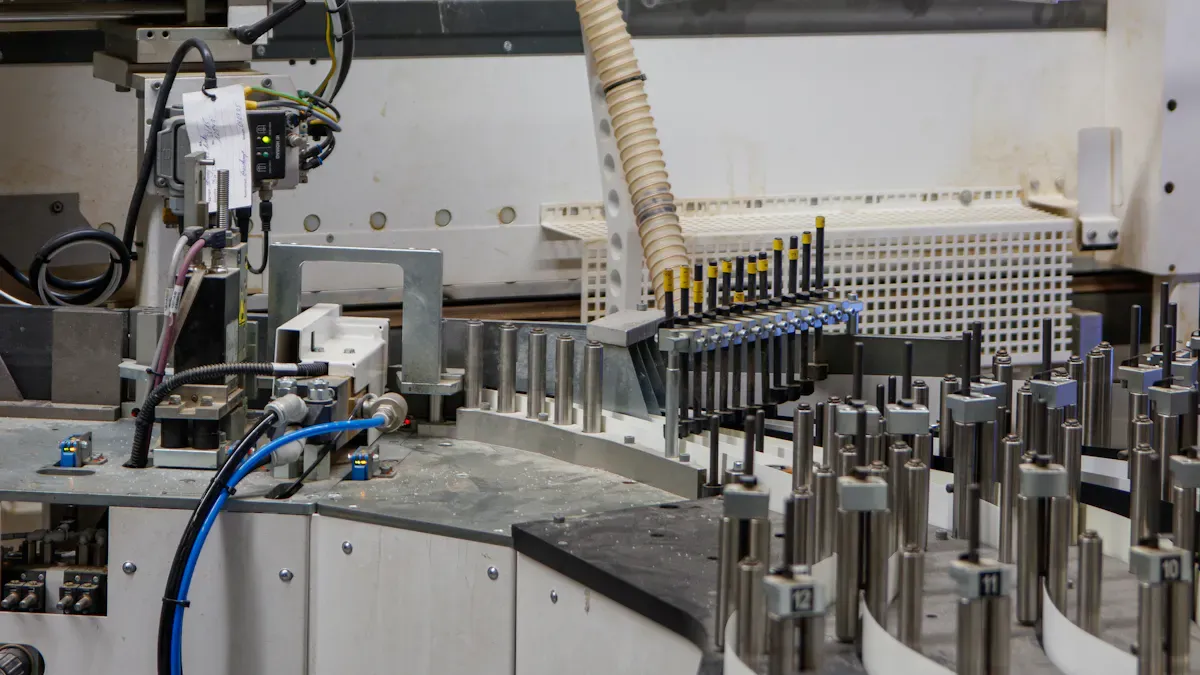
Ampoule filling production lines come in a wide range of prices. Entry-level systems usually start at around $5,000. High-end models can reach up to $320,000. The price depends on the features, automation level, and technology included in the machine.
The table below compares the main features of entry-level and high-end ampoule filling lines:
| Feature/Capability | Entry-Level Models | High-End Models |
|---|---|---|
| Control System | Basic manual controls | PLC (Programmable Logic Controller) |
| Filling Precision | Standard filling nozzles | High-precision filling nozzles |
| Speed Regulation | Fixed speed | Servo motor stepless variable frequency |
| Compliance Standards | Basic industry standards | cGMP, CE, FDA, UL compliance |
| Application Range | Limited to specific products | Multi-functional across various industries |
| Adaptability to Product Types | Limited adaptability | Flexible program adjustment for various products |
| Dosage Tolerance | Standard tolerance | Tolerance of ≤ 0.1 ml |
Entry-level machines are suitable for small-scale production or companies with limited budgets. These machines often have basic controls and fixed speeds. High-end ampoule filling lines offer advanced automation, precise filling, and compliance with strict industry standards. They are ideal for large pharmaceutical manufacturers that require high output and flexibility.
Used Machines and Alternatives
Many buyers consider used ampoule filling lines as a cost-saving option. Used machines can cost 30% to 60% less than new models. For example, a used Ampoule Sealing Machine may be available for $10,000 to $50,000, depending on its age, condition, and features. Refurbished equipment often comes with basic warranties and may include updated parts.
Tip: When buying used equipment, always check for maintenance records and ask for a demonstration. This helps ensure the machine meets your production needs.
Some companies also choose semi-automatic models or modular systems. These alternatives allow for gradual upgrades as production demands grow. They provide flexibility for businesses that want to expand in the future without a large upfront investment.
Market Trends Impacting Price
The ampoule filling machine market is experiencing steady growth. The market is expected to grow at a compound annual growth rate (CAGR) of 6-8% over the next five years. Several factors drive this trend:
- Demand for sterile and high-precision filling solutions is increasing.
- Regulatory standards are becoming stricter, which encourages upgrades to automated systems.
- Technological innovations are making machines more efficient and reliable.
- More companies are outsourcing manufacturing, which increases the need for flexible equipment.
Recent trends also show that demand for Ampoule Sealing Machine systems is rising quickly. The market has a high elasticity coefficient, which means buyers are adopting new systems at a fast rate. However, supply chain disruptions have affected the availability of key components. This has led to production delays and higher costs for some machines.
| Evidence Type | Details |
|---|---|
| Demand Elasticity | High, with rapid adoption of new systems |
| Supply Chain Disruptions | Affecting key components, leading to increased costs |
| Revenue Impact | $200M revenue increase via regional manufacturing hubs |
Note: As the market grows and technology advances, prices may continue to rise, especially for high-end and fully automated models.
Cost Factors for Ampoule Sealing Machine
Capacity and Automation Level
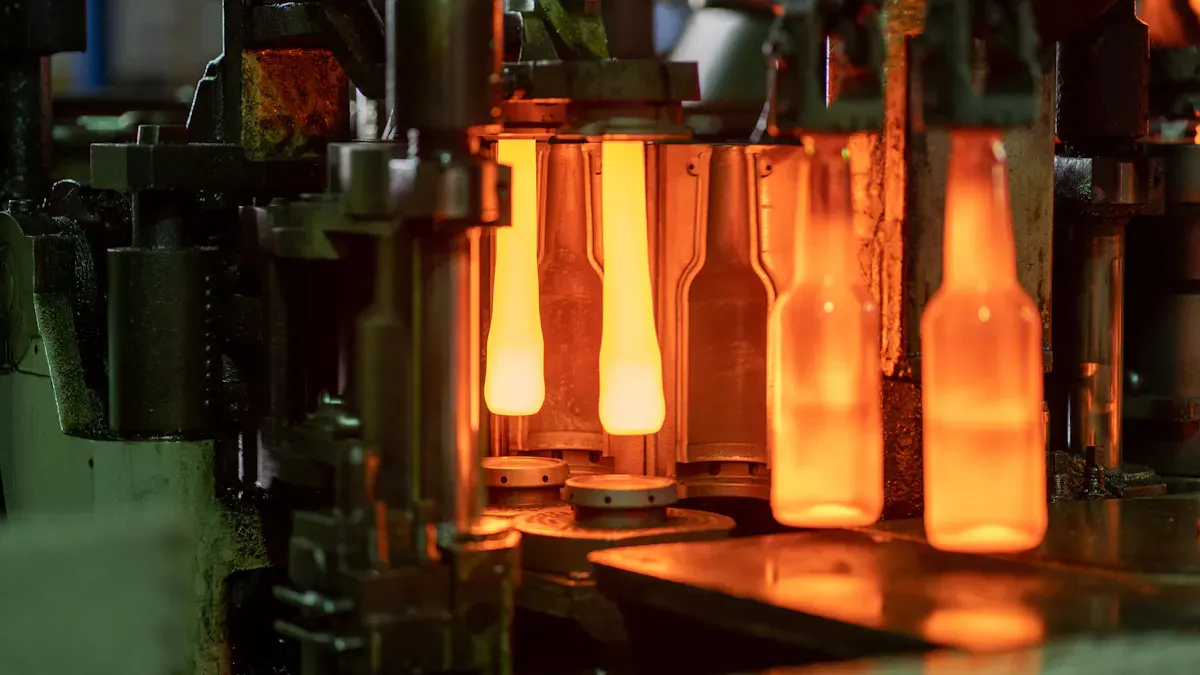
Capacity and automation level are two of the most important factors that influence the price of an Ampoule Sealing Machine. Machines with higher capacity can process more ampoules per hour, which increases productivity. Fully automated systems require less manual labor and offer consistent performance. These machines often include advanced control systems, such as PLCs, that regulate speed and filling accuracy. Entry-level models usually have lower capacity and basic automation, making them more affordable. High-capacity, fully automated machines cost more because they use sophisticated technology and provide greater efficiency.
| Capacity (Ampoules/hour) | Automation Level | Typical Price Range |
|---|---|---|
| 2,000 – 5,000 | Semi-automatic | $5,000 – $20,000 |
| 5,000 – 12,000 | Fully automatic | $20,000 – $80,000 |
| 12,000+ | Advanced automation | $80,000 – $320,000 |
Machines with higher capacity and automation help reduce labor costs and minimize human error. They are ideal for large-scale pharmaceutical production.
Filling and Sealing Technology
The choice of filling and sealing technology has a direct impact on efficiency and reliability. Advanced filling systems improve production speed and accuracy. They also reduce contamination risks, which is critical in pharmaceutical manufacturing. Traditional ampoule designs can pose safety concerns because the break-off mechanism may introduce glass fragments. Modern Ampoule Sealing Machine models use technologies that meet cGMP, FDA, CE, and ISO standards. These standards ensure hygienic and safe production.
- Advanced filling and sealing technology increases speed and accuracy.
- Modern designs lower contamination risks and operational costs.
- Compliance with international standards guarantees product safety.
- Traditional ampoule designs may cause contamination due to glass fragments.
Build Quality and Brand
Build quality determines how long an Ampoule Sealing Machine will last and how much maintenance it needs. Machines made with high-quality materials are more durable and reliable. They require less frequent repairs and maintenance, which lowers overall costs. Regular calibration, cleaning, and servicing are essential for consistent performance. Well-built machines maintain efficiency and minimize downtime.
Brand reputation also affects pricing. Companies known for quality and reliability often charge higher prices. Trusted brands have a proven track record and offer advanced technology. Some recognized brands in the industry include:
- Bosch Packaging Technology: Quality and reliability.
- IMA Group: Innovation in ampoule sealing.
- Romaco Group: Advanced technology.
- ABC Machinery: Precision and reliability.
- XYZ Inc.: Versatility and user-friendly controls.
- DEF Equipment: Durability and low maintenance.
Buyers often pay more for machines from reputable brands because these machines deliver consistent results and require less maintenance.
Extra Features and Customization
Extra features and customization options can significantly increase the price of an Ampoule Sealing Machine. Common features include higher capacity, faster speed, and advanced automation. Customization allows machines to process different ampoule sizes and types of glass. Many manufacturers focus on energy efficiency, improved safety features, and better ergonomics. These enhancements make the machines easier to operate and maintain.
- Machines range from basic to highly automated models.
- Customization options support various ampoule sizes and glass types.
- Energy efficiency and safety features are popular upgrades.
- Improved ergonomics help operators work comfortably.
Custom features and advanced options help companies meet specific production needs, but they also raise the initial investment.
Total Ownership Costs
Maintenance and Spare Parts
Routine maintenance keeps an Ampoule Sealing Machine running smoothly. Spare parts, such as filling nozzles and seals, need replacement after a set number of operating hours. Preventive maintenance reduces downtime and extends equipment lifespan. Machines with higher build quality require less frequent repairs. The table below shows typical cost components over a five-year period:
| Cost Component | Description |
|---|---|
| Purchase Price | Ranges from $3,200 to $100,000, with specialized systems costing more. |
| Installation and Training | Costs for setting up the machine and training operators. |
| Maintenance | Routine and preventive maintenance, including updates every 3,000–5,000 hours. |
| Downtime | Costs incurred due to machine malfunctions or maintenance. |
Regular maintenance and timely replacement of spare parts help minimize unexpected expenses.
Training and Installation
Training ensures operators use the machine safely and efficiently. Installation costs cover the setup and calibration of the production line. Well-trained staff reduce product waste and improve compliance with industry standards. Companies often include training in the purchase package, but additional sessions may be needed for new staff or upgrades.
Operational Expenses
Operational expenses include utilities, labor, and consumables. Electricity and water usage depend on machine capacity and automation level. Labor costs vary by region. The chart below compares operational expense growth rates across countries:
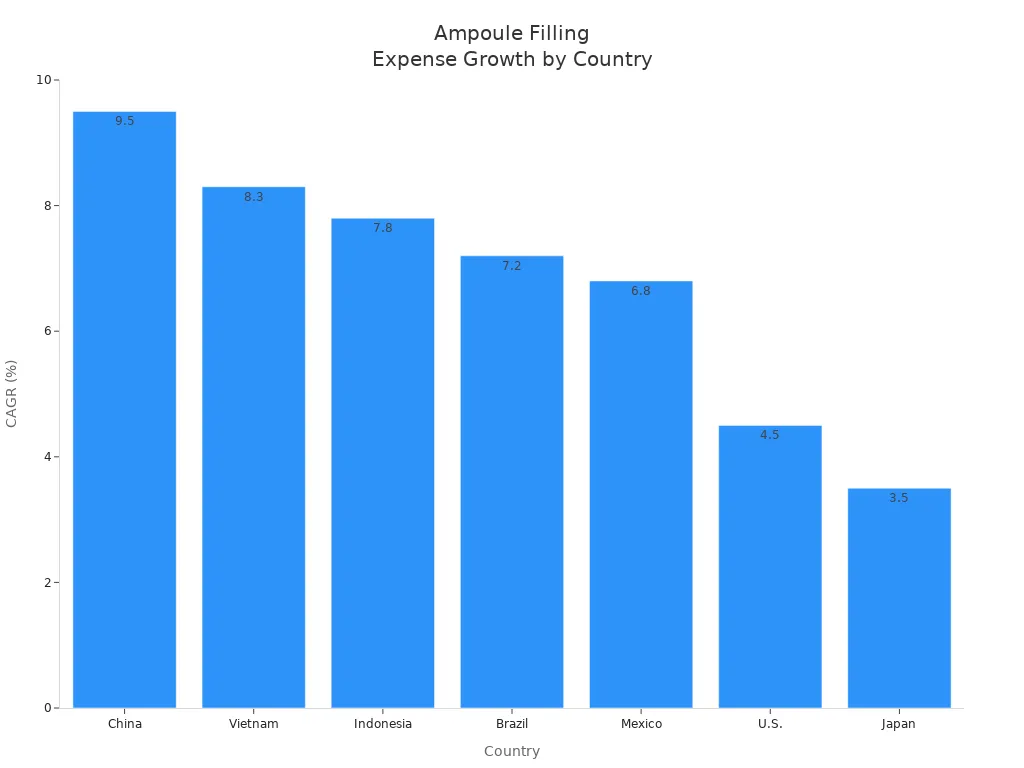
| Country | CAGR (%) |
|---|---|
| China | 9.5 |
| Vietnam | 8.3 |
| Indonesia | 7.8 |
| Brazil | 7.2 |
| Mexico | 6.8 |
| U.S. | 4.5 |
| Japan | 3.5 |
High-quality machines often have lower annual maintenance costs and less downtime. Used machines may have higher maintenance and compliance costs. The table below compares total ownership costs:
| Cost Category | Low-Cost Machine | High-Quality Machine |
|---|---|---|
| Purchase price | Low | Higher |
| Annual maintenance cost | High | Low to moderate |
| Downtime losses per year | High | Low |
| Product waste from inaccuracy | High | Minimal |
| Compliance remediation cost | Variable to high | Minimal |
| Equipment lifespan | 3 to 5 years | 8 to 15 years |
| Total 5-year cost of ownership | Very high | Moderate |
Choosing a reliable Ampoule Sealing Machine can lower operational expenses and improve long-term value.
Ampoule filling production lines range from $5,000 to $320,000. Key cost factors include automation level, production speed, maintenance, and initial investment:
| Cost Factor | Description |
|---|---|
| Automation Level | Reduces labor, improves consistency |
| Production Speed | Faster rates, higher upfront cost |
| Maintenance | Durability, spare parts, service support |
| Initial Investment | Compare upfront cost with long-term savings |
Buyers should:
- Research manufacturer reputation.
- Evaluate customer support.
- Compare total ownership costs.
- Analyze machine technology.
Request detailed quotes and verify supplier credibility to ensure quality and value.
FAQ
What is the typical lead time for a full automatic ampoule filling line?
Lead times usually range from 8 to 16 weeks. Custom features or large orders may require more time.
Can ampoule filling lines handle different ampoule sizes?
Yes. Most modern machines support multiple ampoule sizes. Adjustments or change parts may be needed for each size.
Do I need special utilities for installation?
Most machines require stable electricity, compressed air, and clean water. Check the manufacturer’s specifications for exact requirements.
Post time: Apr-22-2026