


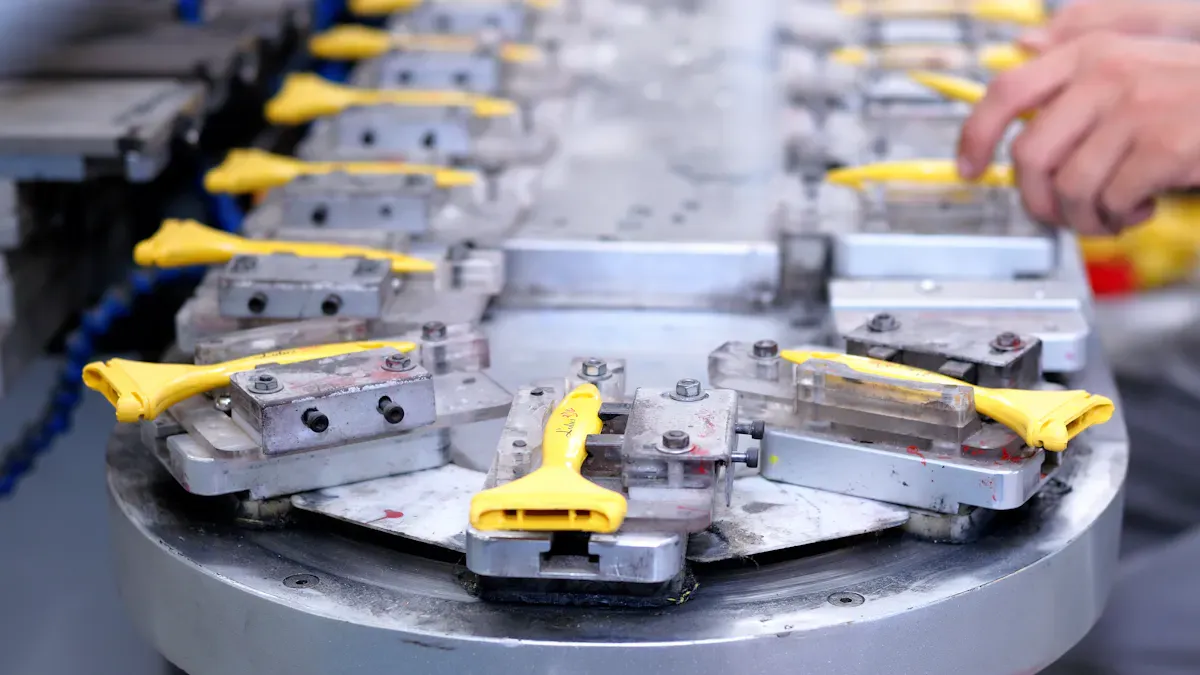
I have seen real changes in production efficiency by focusing on a few core strategies. Regular maintenance of the Ampoule Sealing Machine, strong operator training, automation, and integration all play major roles. The table below shows how each factor directly boosts productivity in any ampoule filling production line.
| Factor | Impact on Production Efficiency |
|---|---|
| Regular Maintenance | Ensures machines operate at peak performance, reducing downtime. |
| Operator Training | Enables quick issue resolution, leading to smoother operations. |
| Automation | Increases productivity by minimizing human input and errors. |
| Integration | Streamlines workflows, reducing time between processes. |
Key Takeaways
●Regular maintenance of the Ampoule Sealing Machine prevents breakdowns and keeps production running smoothly.
●Investing in operator training enhances skills, leading to quicker problem resolution and consistent quality.
●Automation and integration of equipment streamline workflows, reduce labor costs, and improve overall efficiency.
Production Efficiency Factors
Key Components of the Production Line
When I look at an ampoule filling production line, I see several key components that shape efficiency. The Ampoule Sealing Machine stands out because it ensures each ampoule is sealed tightly and safely. Automated capping machines boost speed and keep quality consistent. Conveyors move ampoules smoothly between stations, while filling machines must handle different product types and volumes. I always check if the equipment matches the product’s needs. The table below shows how each factor contributes to efficiency:
| Factor | Description |
|---|---|
| Technology matching | Smooth operation and top-quality results depend on the right technology for each product. |
| Automation levels | Higher automation increases output and reduces errors. |
| Integration with auxiliary equipment | Better workflow and higher efficiency. |
| Space planning | Smart layouts help operators work faster and safer. |
| Maintenance strategies | Regular cleaning and checks prevent breakdowns. |
| Product properties | Viscosity and sterility affect filling and sealing choices. |
Common Bottlenecks
I often notice that bottlenecks slow down the entire line. Some common issues include ampoule breakage, filling inaccuracies, and sealing defects. For example, if the Ampoule Sealing Machine is not calibrated, sealing defects can occur. I address these problems by cleaning nozzles, checking temperatures, and replacing worn parts. Here are some typical bottlenecks and solutions:
●Ampoule breakage: Use gentle handling and strict quality checks.
●Filling inaccuracies: Clean nozzles and replace seals.
●Sealing defects: Calibrate the Ampoule Sealing Machine and clean surfaces.
●Labeling errors: Maintain applicators and use high-quality labels.
●Line synchronization: Adjust machine speeds and check sensors.
Impact of Raw Material Quality
Raw material quality plays a huge role in production efficiency. I have seen how high-quality glass and sealing compounds reduce breakage and defects. When I use non-porous, hermetically sealed ampoules, I know the product stays safe from air, water, and light. Poor-quality materials often cause unplanned downtime and rejected batches. Consistent, high-grade materials keep the line running smoothly and help the Ampoule Sealing Machine work at its best.
Optimizing Ampoule Sealing Machine Performance
Regular Maintenance
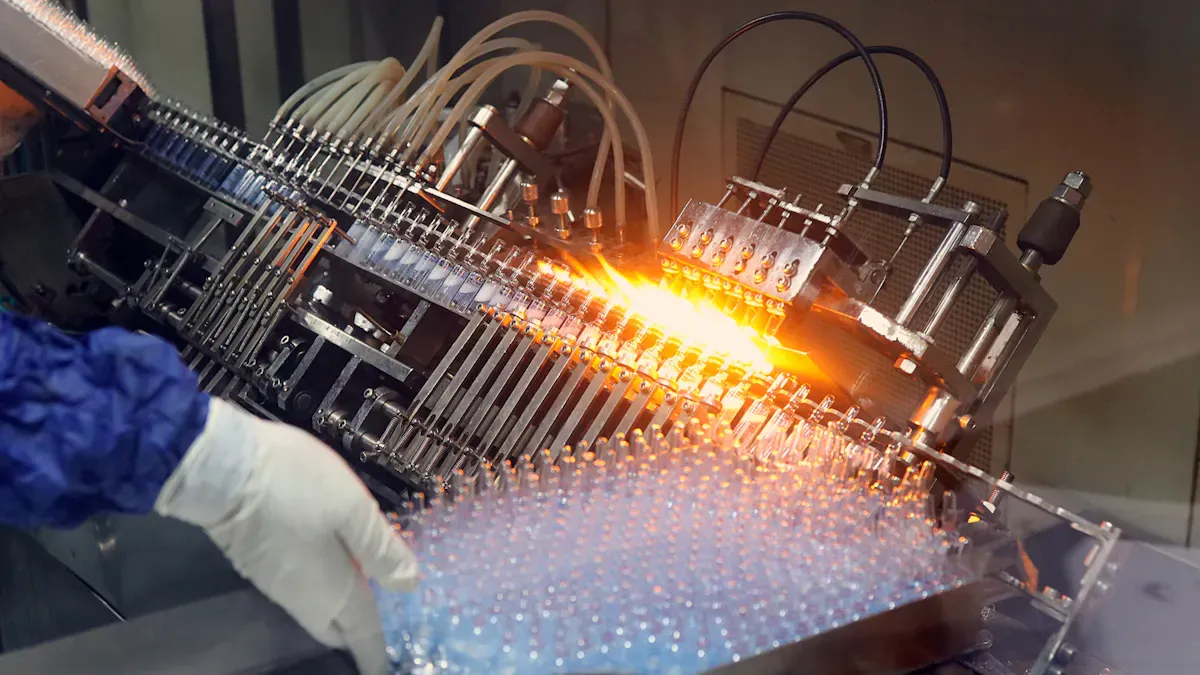
I always start with regular maintenance when I want to boost production efficiency. Routine checks keep the Ampoule Sealing Machine running smoothly. I replace spare parts like filling nozzles and seals before they wear out. Machines with strong build quality need fewer repairs, which means less downtime. I use a simple maintenance schedule to track cleaning, lubrication, and calibration. This approach extends the lifespan of the equipment and helps me avoid unexpected breakdowns. The table below shows how maintenance impacts production:
| Evidence Type | Description |
|---|---|
| Routine Maintenance | Keeps the ampoule sealing machine running smoothly, preventing unexpected breakdowns. |
| Spare Parts Replacement | Timely replacement of parts like filling nozzles and seals is essential for operational efficiency. |
| Build Quality | Machines with higher build quality require less frequent repairs, minimizing downtime. |
| Overall Impact | Regular maintenance extends equipment lifespan and enhances productivity by ensuring consistent performance. |
Operator Training
I believe operator training is just as important as machine maintenance. Well-trained operators understand every function of the Ampoule Sealing Machine. They know how to start, stop, and adjust settings. They follow correct procedures for loading ampoules and unloading finished products. Safety training protects both the operator and the machine. I make sure operators use personal protective equipment and know emergency protocols. These best practices help maintain consistent production quality:
●Familiarization with the machine: Operators learn all controls and safety features.
●Operation procedures: Operators follow steps for loading, starting, and unloading ampoules.
●Safety training: Operators use PPE and know emergency actions.
Tip: I always encourage operators to ask questions and practice troubleshooting. This builds confidence and reduces mistakes.
Machine Design and Upgrades
I pay close attention to machine design and upgrades because they directly affect efficiency. Machines with multiple heads, like two-head or four-head systems, process more ampoules at once. Vertical machinery keeps ampoules upright, which improves sealing integrity. Upgrading to automated inspection systems increases defect detection rates and speeds up inspection. The table below highlights how different designs and upgrades improve performance:
| Type of Machine | Description |
|---|---|
| 2 head ampoule filling and sealing machine | Allows for dual filling, potentially increasing throughput and efficiency. |
| 4 head ampoule filling and sealing machine | Increases the number of ampoules processed simultaneously, enhancing production speed. |
| 8 head ampoule filling and sealing machine | Further boosts efficiency with more filling heads, suitable for high-demand environments. |
| 6-16 head ampoule filling and sealing machine | Offers flexibility in production scale, accommodating varying operational needs. |
| Vertical machinery | Facilitates efficient handling and processing of ampoules, ensuring they remain upright during filling and sealing, which can improve sealing integrity. |
| Improvement Type | Before AOI (Manual) | After AOI (Automated) |
|---|---|---|
| Defect Detection Rate | 70-80% | 98-99% |
| Inspection Speed | N/A | 400 ampoules/minute |
| Labor Costs | Higher | Lower |
Total Productive Maintenance (TPM)
I use Total Productive Maintenance to keep the Ampoule Sealing Machine in top condition. TPM involves everyone, from operators to managers. We set goals for zero breakdowns and zero defects. I schedule regular cleaning and inspections. Operators take responsibility for basic maintenance tasks. We track performance data and look for trends. This strategy helps us find problems early and fix them before they cause downtime. TPM creates a culture of continuous improvement and teamwork.
Note: TPM works best when everyone participates. I always share results and celebrate improvements with the team.
Integration and Automation
Integrating with Other Equipment
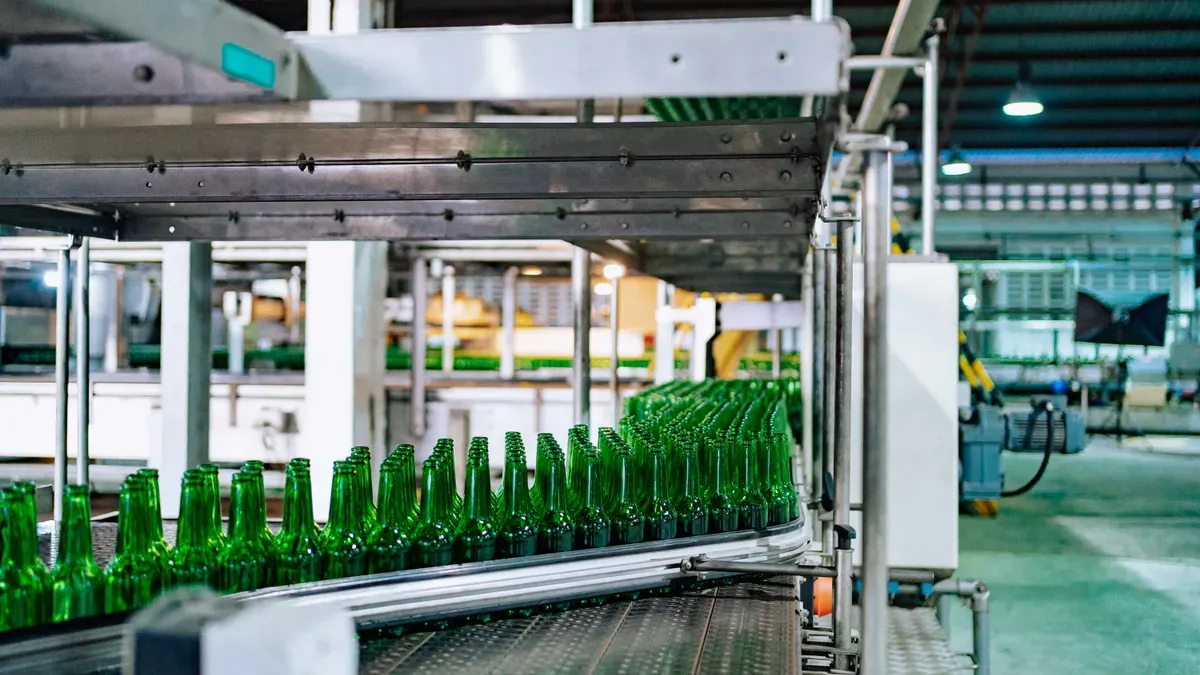
I always look for ways to connect my ampoule filling line with other machines. When I integrate filling, sealing, packaging, and inspection equipment, I see smoother workflows and fewer delays. This setup reduces the need for extra operators and helps my team focus on quality. I use the table below to show the main benefits of integration:
| Benefit | Description |
|---|---|
| Reduced Labor Costs | Integration reduces the need for multiple operators, allowing staff to focus on quality control. |
| Minimized Downtime | Synchronization of processes decreases downtime, improving overall efficiency and throughput. |
| Improved Flexibility | Automated lines can handle various container sizes, facilitating easier production changes. |
| Quality Assurance | Integrated systems maintain controlled conditions, ensuring consistent fill levels and regulatory compliance. |
| Pharmaceutical Production | Helps maintain sterile conditions and prevents cross-contamination, crucial for regulatory compliance. |
Automating Filling and Sealing
I rely on advanced automation to fill and seal ampoules quickly and accurately. These machines move ampoules into place, fill them with the right amount of medicine, and seal them using heat or cold methods. Automation gives me high efficiency and precision. I can use the same machine for different ampoule sizes. Intelligent control panels make operation simple. I have noticed that fully automated lines now dominate the market because they lower labor costs and keep quality consistent. New technology, like robotic arms and inline inspection, makes my production line even more reliable.
Monitoring and Data Analysis
I use monitoring systems to track every step of production. These systems measure fill accuracy, pressure, flow, and temperature. They also check for ampoule tilt and spin, which helps me spot problems early. I collect data in real time and use it to find slow steps or waste. For example, I once found that aluminum cap allocation took much longer than other steps. After making changes, my daily output tripled. Real-time data helps me improve batch consistency, reduce manual checks, and meet strict regulations.
I focus on these key steps to boost ampoule filling efficiency:
| Actionable Step | Description |
|---|---|
| Regular Maintenance | Prevents breakdowns and keeps machines running smoothly. |
| Quality of Raw Materials | Reduces jams and ensures accurate filling. |
| Process Optimization | Improves performance and reduces waste. |
| Upgrades and Modernization | Increases machine speed and reliability. |
| Monitoring and Data Analysis | Helps me spot trends and fix issues fast. |
●I always train my team and keep equipment updated.
●I review my process for bottlenecks and make changes as needed.
●These steps help me achieve higher quality, lower costs, and faster production.
FAQ
How often should I maintain my ampoule sealing machine?
●I check my ampoule sealing machine weekly. Regular maintenance prevents breakdowns and keeps production smooth.
What automation features improve ampoule filling efficiency?
●I use automatic filling, sealing, and inspection systems. These features reduce errors and speed up production.
Can I use different ampoule sizes on the same production line?
| Ampoule Size | Compatibility |
|---|---|
| 1ml | Yes |
| 2ml | Yes |
| 5ml | Yes |
I adjust machine settings for each size.
Post time: Jun-01-2026