


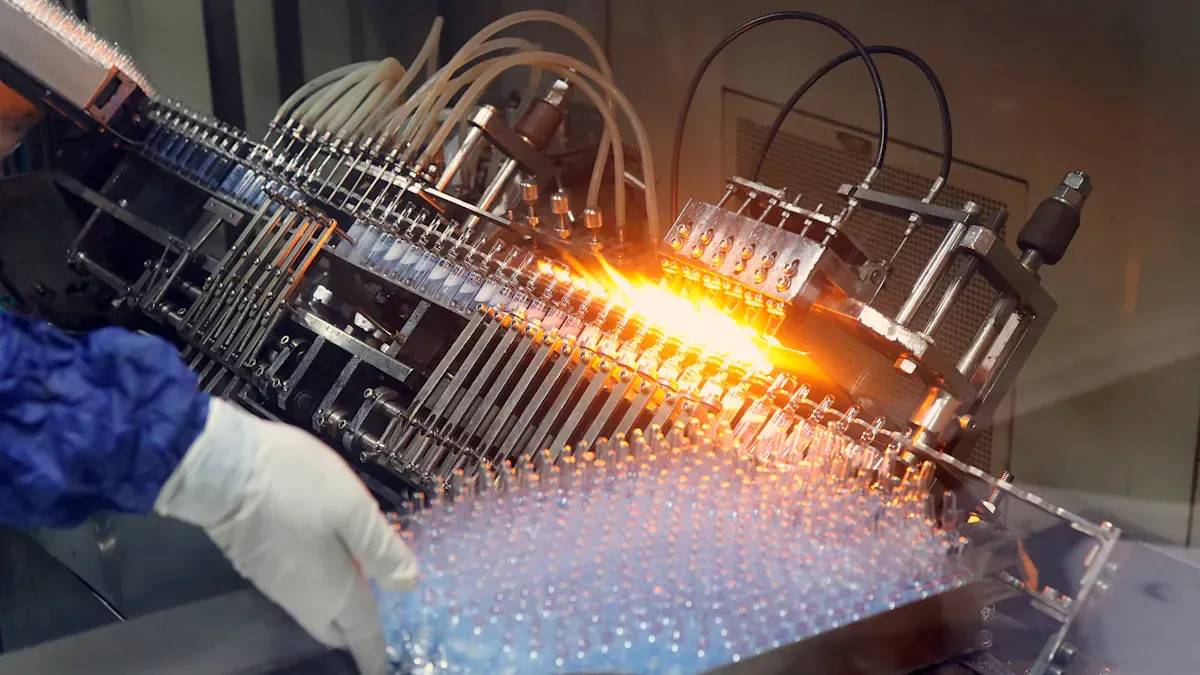
I see GMP as essential for the ampoule filling line. GMP protects safety and product integrity in sterile areas. Good manufacturing practice stops contamination and keeps quality high. I trust GMP to guide the Ampoule Sealing Machine process. GMP also helps me meet global standards and build confidence in pharmaceutical manufacturing.
GMP gives me peace of mind by ensuring each ampoule meets strict quality requirements.
Key Takeaways
●GMP ensures safety and quality in ampoule filling, protecting both patients and manufacturers.
●Following GMP protocols prevents contamination and reduces the risk of costly product recalls.
●Maintaining detailed records and validating processes helps meet regulatory standards and build trust in pharmaceutical products.
GMP in Pharmaceutical Manufacturing
Safety and Quality Control
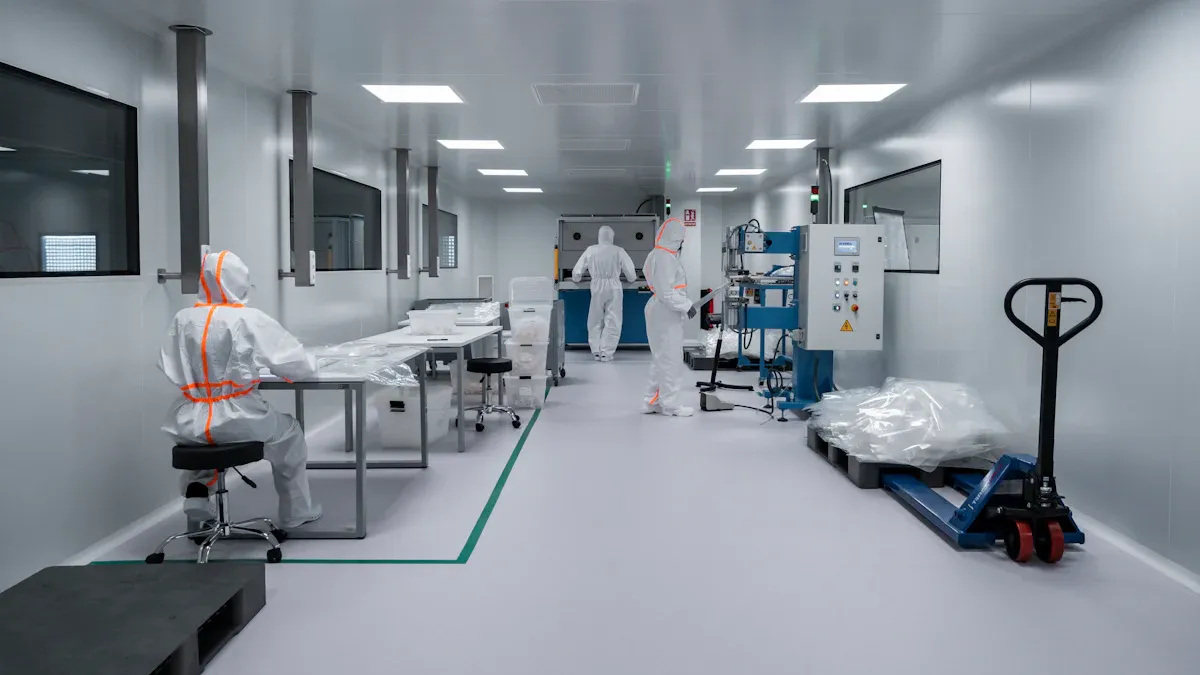
I see GMP as the backbone of pharmaceutical manufacturing. It touches every stage, from container preparation to final sealing. I follow GMP because it gives me a clear framework to control risks and maintain high standards. When I work on an ampoule filling line, I know that even a small mistake can lead to big problems. Quality control is not just a step for me—it is a mindset.
Here are some ways GMP improves quality control in my daily work:
●I use GMP to make sure every ampoule meets strict standards.
●GMP helps me spot and fix problems before they reach patients.
●I rely on GMP to keep my process consistent and reliable.
●GMP reduces waste and prevents costly recalls.
●I trust GMP to protect both my company and the people who use our medicines.
I remember that quality is essential because patients and healthcare professionals depend on safe medicines. GMP ensures that every ampoule I produce is safe, effective, and trustworthy.
Preventing Contamination
Contamination is one of my biggest concerns in ampoule filling. Without GMP, I face many risks:
●Microbial contamination
●Particulate contamination
●Fill volume variation
●Vial breakage or spillage
●Human intervention in Grade A areas
●Equipment stoppage during filling
I never forget the NECC meningitis outbreak in 2012. The New England Compounding Center ignored GMP and shipped contaminated vials. Over 750 patients got sick, and 64 people died. This tragedy showed me what can happen when GMP is not followed.
To prevent contamination, I use specific GMP protocols every day. These include:
| GMP Protocols |
|---|
| EU GMP Guidelines |
| US FDA cGMP |
| WHO GMP |
| PIC/S Regulations |
I also keep up with changes in GMP. For example, the revision of EU GMP Annex 1 made me focus more on contamination control and sterility assurance. I use tools like media fill tests, environmental monitoring, and equipment qualification to keep my process safe. I rely on systems like Pharmaceutical Quality System, Quality Risk Management, and Contamination Control Strategy to manage risks and protect patients.
Regulatory Compliance
I know that GMP is not just about quality and safety. It is also about following the law. Good manufacturing practice helps me meet international standards, including EU GMP regulations. I must comply with rules from the US FDA, WHO, and other agencies. If I do not follow GMP, I risk recalls, penalties, and loss of trust.
GMP covers every stage of ampoule filling:
1.Container Preparation
2.Initial Sterilization
3.Stopper and Closure Component Preparation
4.Product Filtration and Sterilization
5.Aseptic Filling
6.Stoppering and Sealing
7.Additional Processing
By following GMP at each step, I make sure my products are safe and legal. I know that regulatory agencies check my records and processes. I keep detailed documentation to prove that I follow GMP every day.
GMP is my guide to producing safe, high-quality ampoules that meet global standards.
Ampoule Sealing Machine Standards
Equipment Hygiene
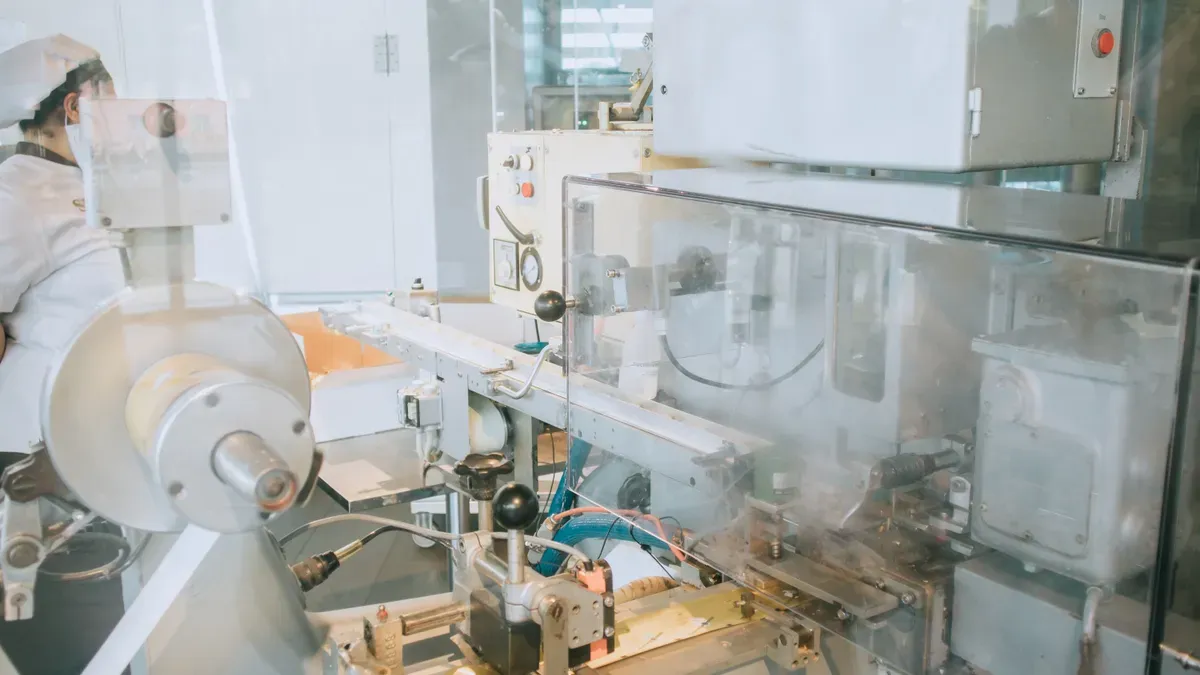
I know that keeping the ampoule sealing machine clean is one of my top priorities. In my daily routine, I follow strict GMP requirements for cleaning and sterilizing every part of the machine. This helps me protect the sterile environment needed for safe production of sterile injectables. I always clean and sterilize the ampoule sealing machine before each use or whenever I switch to a new batch or product. This routine prevents any leftover material or residue from contaminating the next batch.
| Frequency of Cleaning |
|---|
| Before use or every batch/product change over |
I also pay close attention to the maintenance of the ampoule sealing machine. Regular maintenance checks help me spot worn-out parts and keep everything running smoothly. I lubricate moving parts and check for any signs of damage. By following these steps, I prevent cross-contamination and avoid mislabeling. I also make sure that the sealing process creates airtight and watertight barriers, which keeps out contaminants and protects the quality of sterile injectables.
| Evidence Point | Description |
|---|---|
| Regular Maintenance | Ensures consistent quality by checking for worn-out parts and lubricating moving parts. |
| Sealing Process | Creates airtight and watertight barriers, preventing contamination. |
| Environmental Control | Maintains optimal temperature and humidity to prevent degradation and contamination. |
| Cleaning Protocols | Regular cleaning and disinfection of equipment to avoid cross-contamination. |
I have learned that a clean ampoule sealing machine is the first step in producing safe and effective medicines.
Process Validation
I take process validation very seriously on the ampoule filling line. GMP guidelines require me to prove that the ampoule sealing machine works as intended every time. I use several steps to validate the process and ensure the safety of sterile injectables.
| Step/Requirement | Description |
|---|---|
| Media Fill Definition | Simulates aseptic filling with nutrient media |
| Validation Requirement | Validates all procedures, including process simulation |
| Environmental Monitoring | Tracks air quality, particles, and hygiene |
| Worst Case Simulation | Tests maximum loads and interventions |
| Number of Filled Units | At least 3,000 units for statistical confidence |
I run media fill tests to simulate the aseptic fill and finish process. These tests help me check if the ampoule sealing machine can keep the product sterile under real working conditions. I also monitor the environment for air quality and particles. I test the machine with the highest possible load and during operator interventions to make sure it performs well even in tough situations.
●I validate and monitor the ampoule filling line to comply with GMP guidelines.
●I run aseptic process simulations, and I need three successful runs before I can start production.
●I investigate any failures right away to keep quality and safety high.
●I train operators, maintain equipment, and oversee cleaning and quality assurance.
●I use microbiological monitoring to make sure the aseptic process stays intact.
These steps help me reduce the risk of defective ampoules and keep patients safe.
Quality Assurance
Quality assurance is at the heart of my work with the ampoule sealing machine. GMP standards require me to check every ampoule for defects. I use sensitive equipment to find any ampoules that might leak or have other problems. For example, I perform 100% integrity testing on all containers closed by fusion, such as glass ampoules. This means I check every single ampoule to make sure it meets the highest standards.
●US regulations require me to examine each unit in a batch with a dependable, sensitive test to find defective units like leakers.
●EU guidelines tell me to perform 100% integrity testing on ampoules.
●I qualify leak-detection machines by challenging them with calibrated samples.
●I sometimes use special methods, like microdrilling or inserting capillary tubes, to create test samples for machine qualification.
I also use a Quality-by-Design approach. I study the process, assess risks, and run full-scale GMP batches under normal conditions. I check both the physical and chemical attributes of each ampoule, such as appearance, integrity, fill volume, and wall consistency. This helps me make sure the ampoule sealing machine performs as expected and delivers high-quality products.
1.I characterize the process to define the best operating conditions.
2.I use risk assessments and multivariate studies to improve quality.
3.I manufacture full-scale GMP batches based on my findings.
4.I check both physical and chemical attributes to confirm process performance.
My commitment to quality assurance means every ampoule I produce is safe, effective, and ready for patient use.
Non-Compliance Risks
Product Recalls
I know that failing to follow gmp can lead to product recalls. When I do not meet quality standards, unsafe ampoules can reach the market. This puts patients at risk and forces me to remove products from shelves. Recalls damage my company’s reputation and cost a lot of money. I have seen how a single recall can disrupt the supply chain and create shortages for hospitals and pharmacies. I always remember that one mistake can affect thousands of people.
Legal and Regulatory Penalties
I face serious consequences if I ignore gmp. Regulatory agencies like the FDA can issue Warning Letters or Import Alerts. These actions stop me from selling my products in important markets. I have learned that companies can lose hundreds of millions of dollars in annual revenue because of import alerts. Recovery from these penalties can take up to three years, and during that time, I cannot sell anything from the affected site. I keep detailed records and follow procedures to avoid these costly setbacks.
●Warning Letters
●Import Alerts
●Revenue loss for months or years
I know that legal penalties do not just hurt my business—they also slow down access to life-saving medicines.
Loss of Trust
I believe that trust is the foundation of pharmaceutical manufacturing. When I do not follow gmp, I risk losing the confidence of customers, partners, and regulators. Achieving quality objectives requires commitment from everyone in my organization, including suppliers and distributors. A strong quality assurance system helps me maintain trust in the global market. If I lose trust, it becomes very hard to recover my reputation and rebuild relationships.
I work hard every day to protect the trust that patients and healthcare professionals place in my products.
I see GMP as the foundation for safe and high-quality ampoule filling. I follow strict standards to protect patients and meet global expectations.
| Component/Benefit | Description |
|---|---|
| Product Consistency and Quality | Ensures that products meet the required standards consistently, reducing variability. |
| Mitigating Recall Risks | Lowers the chances of product recalls by adhering to strict quality controls. |
To keep improving, I:
●Validate every process step
●Maintain detailed records
●Use advanced monitoring technology
FAQ
What does GMP mean for ampoule filling?
I follow GMP to keep ampoule filling safe and clean. GMP gives me rules for hygiene, quality checks, and process validation.
How often should I clean the ampoule sealing machine?
I clean the ampoule sealing machine before every batch change. I also check and clean it after maintenance or any unexpected stoppage.
What happens if I do not follow GMP?
●I risk product recalls.
●I face legal penalties.
●I lose trust from customers and regulators.
Post time: Jun-09-2026